
Hot Flashes After Eating? A Calm Thanksgiving Dinner Guide
Medically reviewed by our medical team
Thanksgiving brings a warm kitchen, a full table, and often a glass of wine or a cup of coffee with pie. For many women in perimenopause or menopause, it can also bring a sudden wave of heat halfway through the meal.
Hot flashes after eating are common, and they are rarely a sign that something is wrong. Understanding what may set them off can help you enjoy the holiday with more comfort and less worry.
Key Takeaways
- Hot flashes are mainly driven by hormonal changes, not by food alone.
- Spicy dishes, hot drinks, caffeine, alcohol, and warm rooms are common triggers.
- Triggers vary from woman to woman, so personal patterns matter most.
- Effective treatments exist when hot flashes affect sleep or daily life.
Why Do Hot Flashes After Eating Happen?
The Office on Women’s Health describes a hot flash as a sudden feeling of heat, often with flushing and sweating. Changing hormone levels around menopause make the brain’s temperature control more sensitive.
Because of that sensitivity, a small rise in body temperature may be enough to start a hot flash. Mayo Clinic guidance on hot flashes notes that hot and spicy foods, caffeine, and alcohol can set one off.
In other words, the meal is usually the spark, not the cause. The underlying driver is the hormonal transition itself.
What Does a Hot Flash Feel Like?
Doctors call hot flashes and night sweats vasomotor symptoms. According to Mayo Clinic’s overview of symptoms and causes, a hot flash may include:
- Warmth spreading through the chest, neck, and face.
- Flushed or blotchy skin.
- A fast heartbeat and sweating, mostly on the upper body.
- Chills or a feeling of anxiety as it fades.
A single hot flash usually lasts 1 to 5 minutes. Many women have them daily, and on average they continue for more than seven years.
Which Thanksgiving Foods and Drinks May Trigger Hot Flashes?
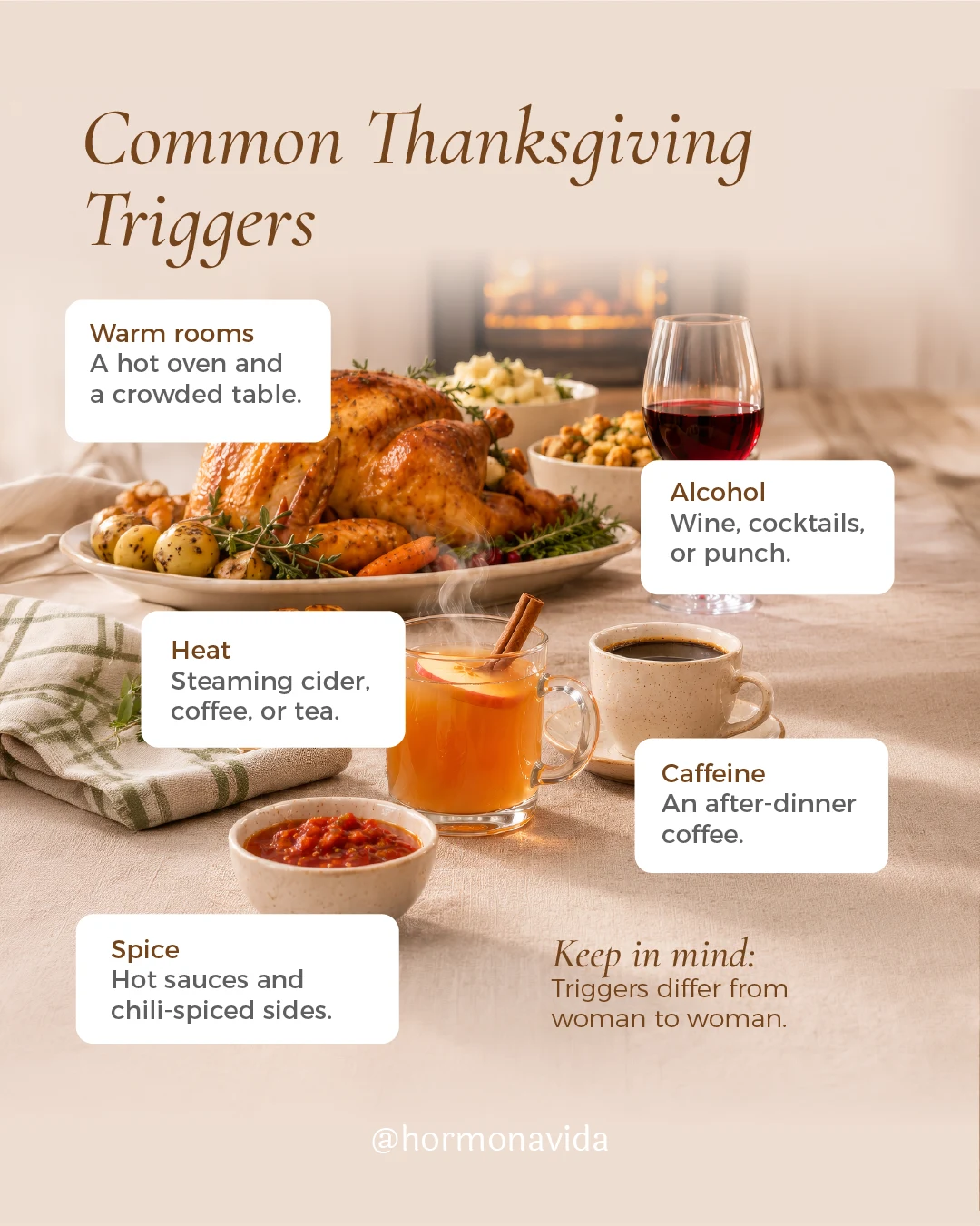
The National Institute on Aging lists alcohol, spicy foods, and caffeine as common triggers. On Thanksgiving, these often appear together:
- Spicy sides: chili-spiced sweet potatoes, hot sauce, or jalapeño cornbread.
- Hot drinks: steaming cider, coffee, or tea served with dessert.
- Caffeine: an afternoon coffee to stay awake after a big meal.
- Alcohol: wine with dinner, cocktails, or spiked punch.
- Warm rooms: a hot oven, a crowded table, and heavy sweaters.
Not every woman reacts to every item. Some notice a pattern with red wine, while others feel nothing from it. Tracking your own reactions is more useful than avoiding every holiday favorite.
What Is the Link Between Menopause and Alcohol?
Many women notice that alcohol affects them differently in midlife. You can read more about why alcohol tolerance may change in midlife in our earlier article.
Alcohol is one of the most commonly reported hot flash triggers. If a drink appears to bring on heat or flushing, smaller servings may help. Sparkling water with fruit is another option.
The CDC guidance on moderate alcohol use describes moderate drinking for women as one drink or less in a day. A standard drink is about 5 ounces of wine, which is smaller than many holiday pours.
Lower alcohol intake also matters beyond hot flashes. The CDC links long-term alcohol consumption to several health risks. These include high blood pressure, heart disease, and breast cancer in women. Heavier drinking brings a higher risk over time.
None of this means you cannot enjoy a glass of wine at dinner. It simply helps to notice how alcohol affects your body and to choose alcoholic beverages with intention.
Do Trigger-Avoidance Tips Work?
Avoiding triggers is a reasonable first step, but the evidence is limited. In its 2023 nonhormone therapy position statement, The Menopause Society did not list trigger avoidance as a proven treatment.
That does not make these steps harmful. If a certain food or drink clearly brings on your hot flashes, skipping it is common sense. However, these habits may not be enough when hot flashes are frequent or strong.
Weight is another factor. Many women notice weight gain around menopause. Mayo Clinic notes that weight loss may improve hot flashes in people with overweight or obesity.
The same statement supports options such as cognitive behavioral therapy, clinical hypnosis, weight loss, and several nonhormone medications. Hormone therapy remains the most effective treatment for many women, when clinically appropriate.
Can a Holiday Meal Affect Night Sweats and Sleep?
Night sweats are hot flashes that happen during sleep. Mayo Clinic notes that they may wake you and can lead to long-term sleep loss.
A late dinner, a final glass of wine, or a warm house may make Thanksgiving night feel hotter. Sleep problems can then affect energy, focus, and mood swings the next day.
The National Institute on Aging suggests a cooler bedroom, a fan, and layered bedding. Small sips of cold water before bed may also help. These steps may help you rest after a long day of celebrating.
How Can You Enjoy a Healthy Thanksgiving?
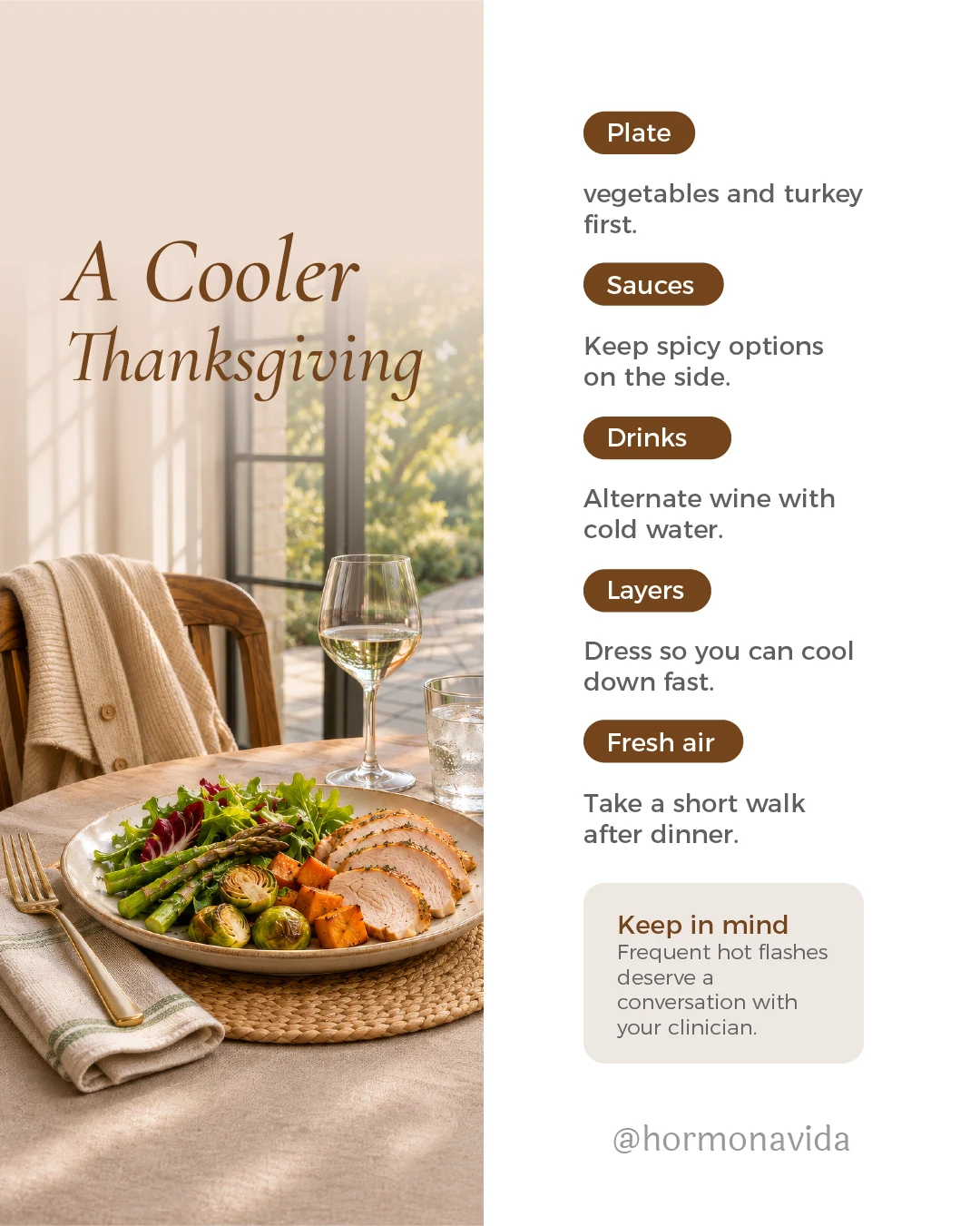
A healthy Thanksgiving does not require giving up favorite foods. Small, practical choices can make the day more comfortable:
- Build a balanced plate: start with vegetables and a lean protein, such as turkey, then add favorites.
- Ask for a mild version: keep spicy sauces on the side.
- Let drinks cool: enjoy cider or tea warm rather than steaming.
- Alternate drinks: follow each glass of wine with a glass of cold water.
- Dress in layers: remove a sweater easily when the room heats up.
- Step outside: a short walk after dinner offers fresh air and a cooler setting.
Mayo Clinic also suggests sipping a cold drink when you feel a hot flash coming on.
When Should You Talk With a Clinician?
Hot flashes are a normal part of the hormonal transition. Still, they deserve attention if they disrupt your sleep, mood, or quality of life.
Less commonly, hot flashes may come from thyroid problems or medication side effects. A clinician can help sort out the cause when symptoms feel new or unusual.
The Office on Women’s Health notes that the FDA has approved hormonal and nonhormonal treatments for hot flashes. Each option has benefits and risks, so the right choice depends on your health history. Our article on hormone therapy for hot flashes explains more.
Key Takeaway
Hot flashes after eating often reflect a sensitive temperature system during menopause. Certain foods, drinks, or a warm room may then act as the trigger. Knowing your personal patterns can help you enjoy Thanksgiving with more ease.
At Hormona Vida, we look at patterns over time and offer structured, continuity-based care during the hormonal transition.
Feeling the Heat This Holiday Season?
Hot flashes should not determine how you experience the holidays. To talk through your symptoms and treatment options with a clinician, Speak With Our Care Team.
Frequently Asked Questions
Why do I get hot flashes after eating?
Hormonal changes make your body more sensitive to small rises in temperature. Spicy dishes, hot beverages, caffeine, and alcohol may then trigger a hot flash.
Does alcohol cause hot flashes?
Alcohol is a common trigger for many women in menopause. Reactions vary, so notice whether certain drinks affect you.
Can I still enjoy Thanksgiving dinner during menopause?
Yes. Simple steps, such as milder seasoning, cooler drinks, and lighter layers, can help you enjoy the meal more comfortably.
References
Centers for Disease Control and Prevention. (2025). About moderate alcohol use. U.S. Department of Health and Human Services.
Centers for Disease Control and Prevention. (2025). Alcohol use and your health. U.S. Department of Health and Human Services.
Centers for Disease Control and Prevention. (n.d.). About standard drink sizes. U.S. Department of Health and Human Services.
Mayo Clinic. (2026). Hot flashes: Diagnosis and treatment.
Mayo Clinic. (2026). Hot flashes: Symptoms and causes.
National Institute on Aging. (2021). Hot flashes: What can I do? National Institutes of Health.
Office on Women’s Health. (2026). Menopause symptoms and relief. U.S. Department of Health and Human Services.
The North American Menopause Society. (2023). The 2023 nonhormone therapy position statement of The North American Menopause Society. Menopause, 30(6), 573–590.