

What Is Adrenal Fatigue? Stress, Hormones, and Menopause
Many women google what is adrenal fatigue when they feel tired for months. They want answers for brain fog, low mood, and poor sleep. Midlife, perimenopause, and menopause often make these symptoms stronger.
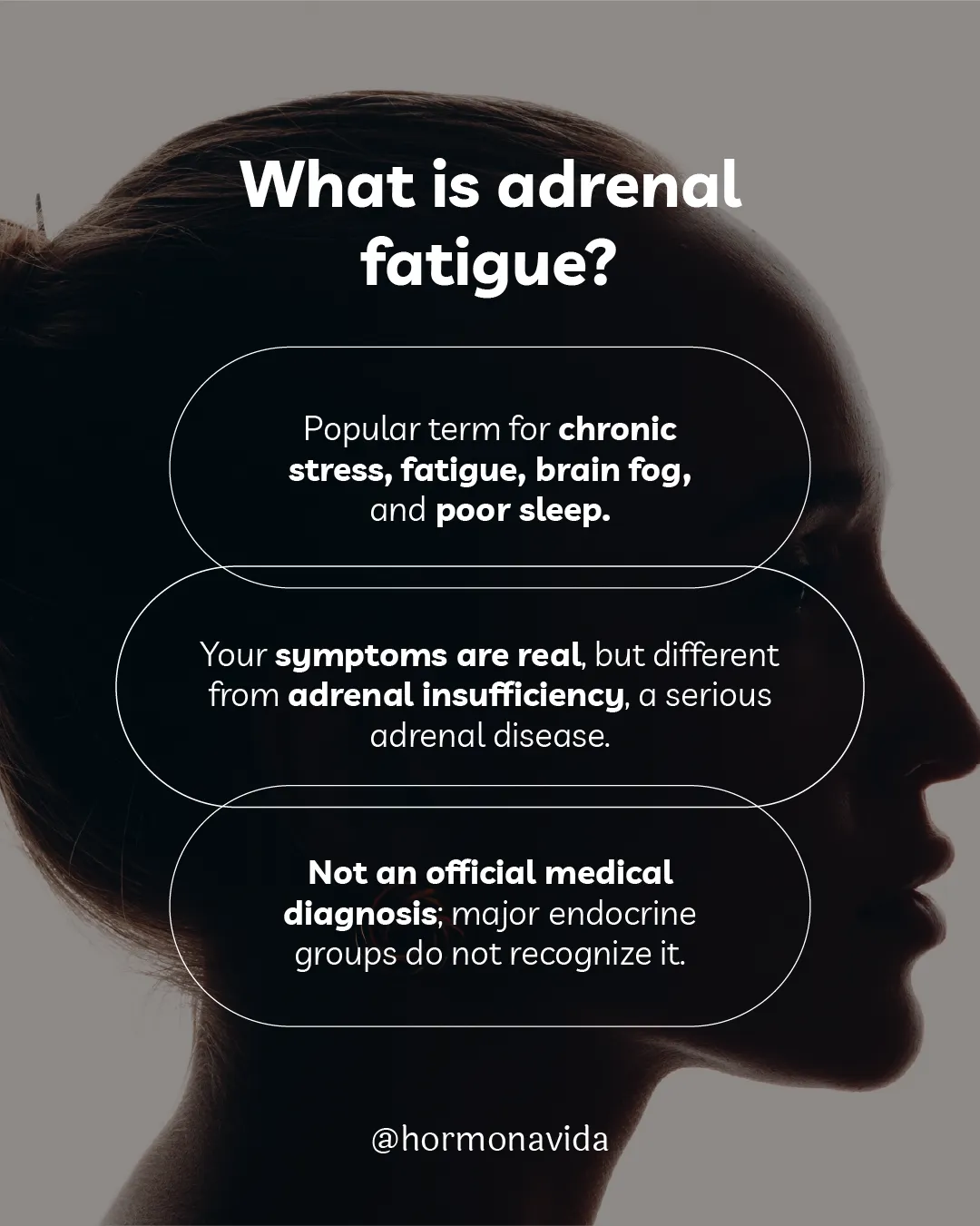
Adrenal fatigue is a popular idea in wellness spaces. It claims that chronic stress exhausts the adrenal glands and lowers cortisol.
However, major endocrine societies say there is no solid proof that healthy adrenal glands simply “wear out.” Your symptoms are still real.
At Hormona Vida, we respect your experience and also respect current hormone science.
How your adrenal glands actually work
Your adrenal glands are small, triangle-shaped organs. They sit on top of each kidney like tiny caps. These glands produce hormones that help you respond to stress and daily life.
One key job is producing cortisol. Cortisol helps you wake up, cope with stress, and regulate blood sugar. During a fight or flight response, cortisol and adrenaline rise to protect you.
The adrenal glands also make adrenal hormones like aldosterone and DHEA. These hormones influence blood pressure, fluid balance, metabolism, and even how you feel. After menopause, adrenal hormones can play a bigger role because ovarian hormones decline.
Adrenal fatigue vs real adrenal disease
Adrenal fatigue is a term used to describe non-specific symptoms. People talk about low energy, body aches, cravings, and unrefreshing sleep. These are often labeled as symptoms of adrenal fatigue.
Research has checked many saliva and blood tests for this idea. Studies do not show a clear pattern of “mild adrenal failure.” So experts conclude adrenal fatigue is a term, not a proven medical diagnosis.
There is a serious medical condition called adrenal insufficiency. Here, damaged adrenal glands cannot produce hormones like cortisol and aldosterone properly. Typical symptoms of adrenal insufficiency include extreme fatigue, weight loss, low blood pressure, nausea, and darker skin. An adrenal crisis can be life-threatening and always needs emergency care.
Because of that, proper evaluation matters. Never ignore sudden weakness, fainting, severe pain, or vomiting.
Why midlife and menopause make fatigue worse
Many women in their forties and fifties say, “I just don’t feel like myself.” They juggle work, caregiving, and constant digital demands.
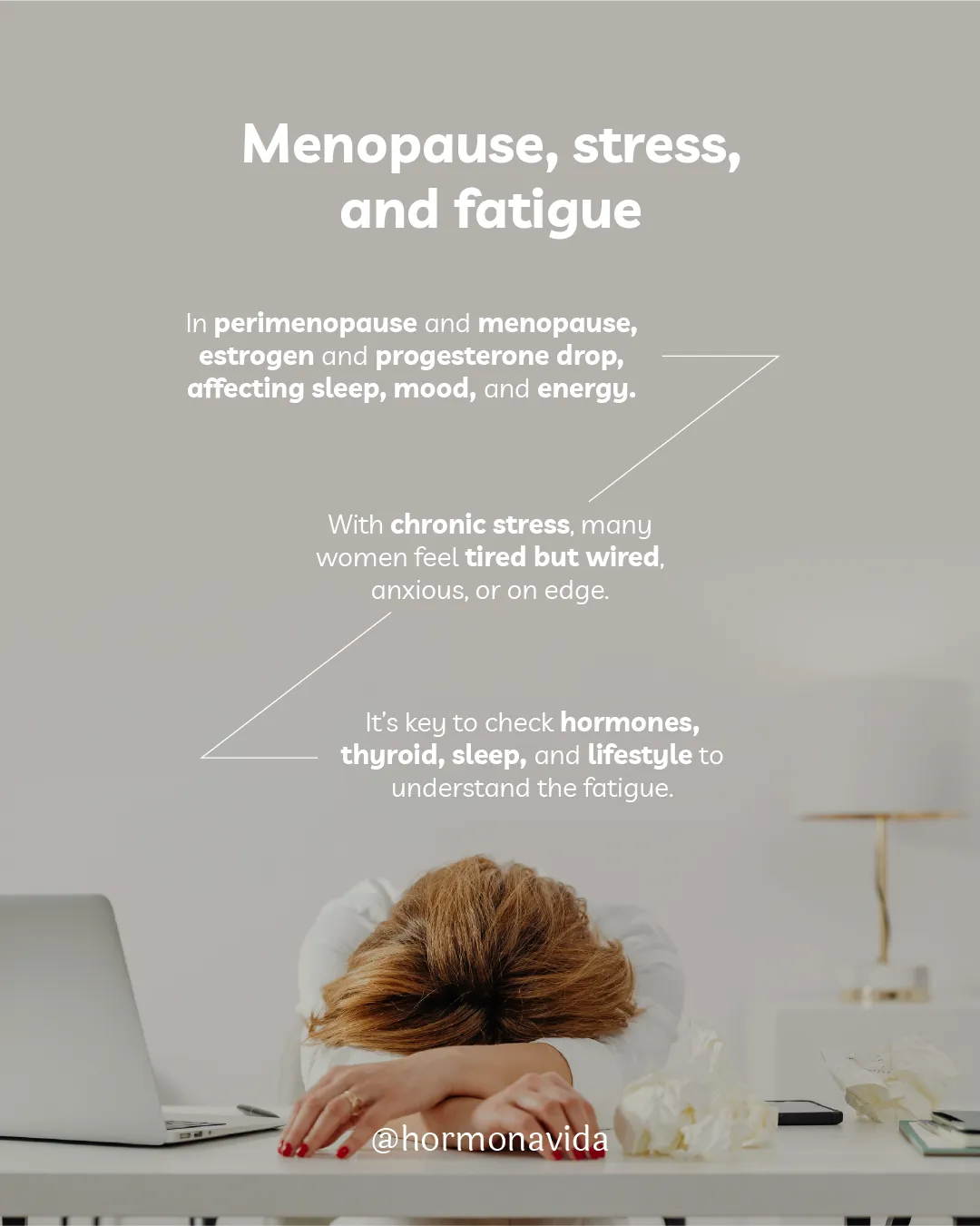
During perimenopause and menopause, estrogen and progesterone change and decline. This shift can disturb sleep, mood, temperature control, and energy. At the same time, modern life keeps your stress system “on” for hours. The brain triggers repeated fight or flight responses during chronic stress.
Your adrenal glands work hard to keep up with these signals. Over time, you may feel tired, wired, anxious, or emotionally flat. Many women are told, “Your labs are normal,” and leave with no answers. Others receive a quick label of adrenal fatigue without deeper investigation.
At Hormona Vida, we look at the larger picture. We connect stress, sleep, metabolism, thyroid, gut, and menopausal hormone shifts.
Getting proper testing and a clear plan
If you are worried about your adrenals, start with trusted medical professionals. They will review your story, medications, and other health problems. They may order targeted blood tests to check cortisol and other adrenal hormones.
Online companies often sell saliva tests for adrenal fatigue. These tests are not standardized or strongly validated by research. They can miss serious disease or cause unnecessary fear.
Instead, your provider may check morning cortisol, electrolytes, glucose, and blood pressure. They may also screen for anemia, thyroid disease, sleep apnea, and other silent health problems. The goal is clear: rule out dangerous issues and understand what really drives your fatigue.
Safe ways to support energy and hormone balance
There is no single “magic” treatment for adrenal fatigue. Remember, adrenal fatigue is a term, not an official diagnosis.
At Hormona Vida, we focus on root causes. These may include perimenopause, menopause, thyroid changes, stress overload, gut issues, or mood disorders. We then build a plan to support adrenal fatigue-type symptoms and your overall hormone balance.
Helpful basics often look like this:
- Move your body regularly with walking and gentle strength training.
- Protect your sleep with consistent hours and a calming evening routine.
- Use tools like breathwork, prayer, or journaling to cool your stress response.
- Choose steady meals with protein, fiber, and healthy fats.
- Limit caffeine and alcohol, which can disturb sleep and mood.
Be cautious with supplements that promise to “fix” adrenal fatigue. Some products contain hidden steroids or animal gland extracts. These pills can change how your body is producing cortisol and other hormones.
How Hormona Vida supports women with fatigue
Our clinic works closely with women facing midlife fatigue and hormone shifts. We know these seasons can feel overwhelming.
First, we listen carefully. Then we use appropriate blood tests and imaging when needed. If we suspect serious adrenal disease, we coordinate care with endocrinology.
We also evaluate menopausal hormones and overall metabolic health. When appropriate, we may discuss lifestyle strategies, nutrition, and personalized hormone support. Every plan is individualized and designed around safety and long-term wellbeing.
Conclusion
Adrenal fatigue is a term born from real suffering and symptoms of adrenal fatigue. Current evidence still says your adrenal glands almost never “burn out” from stress alone.
Most women’s fatigue comes from a mix of chronic stress, hormone changes, sleep disruption, and other health problems. You do not need to carry this alone. With compassionate care and science-based guidance, you can move toward steadier energy again.
FAQs about adrenal fatigue and menopause
Is adrenal fatigue real?
Adrenal fatigue is a term for a cluster of stress-related symptoms. Major endocrine groups state it is not a recognized disease.
How is it different from adrenal insufficiency?
Adrenal insufficiency is a serious medical condition. In this disease, damaged adrenal glands cannot produce hormones correctly. It causes classic symptoms of adrenal insufficiency, such as low blood pressure and weight loss.
What should I do if I feel tired all the time?
Book a visit with trusted medical professionals. Ask for a careful history, exam, and targeted blood tests. From there, you and your team can build a step-by-step plan.
References
- Cadegiani, F. A., & Kater, C. E. (2016). Adrenal fatigue does not exist: A systematic review. BMC Endocrine Disorders, 16(1), 48.
- Endocrine Society. (2022, January 25). Adrenal fatigue.
- Harvard Health Publishing. (2020). Is adrenal fatigue “real”?
- Mayo Clinic. (2024, April 10). Adrenal fatigue: What causes it?
- Cleveland Clinic. (n.d.). Adrenal gland disorders; Addison’s disease.