

Hormonal Migraines: Why They Happen and How to Find Relief
If your headaches spike around your menstrual period, you are not imagining the pattern. Many women with migraine notice predictable changes tied to the menstrual cycle. Those episodes can feel more intense, longer, and harder to manage.
At Hormona Vida, we treat this as real, measurable, and manageable. We focus on patterns, risk factors, and a practical treatment plan. We also support lifestyle steps that fit real life.
What “hormonal migraines” usually means
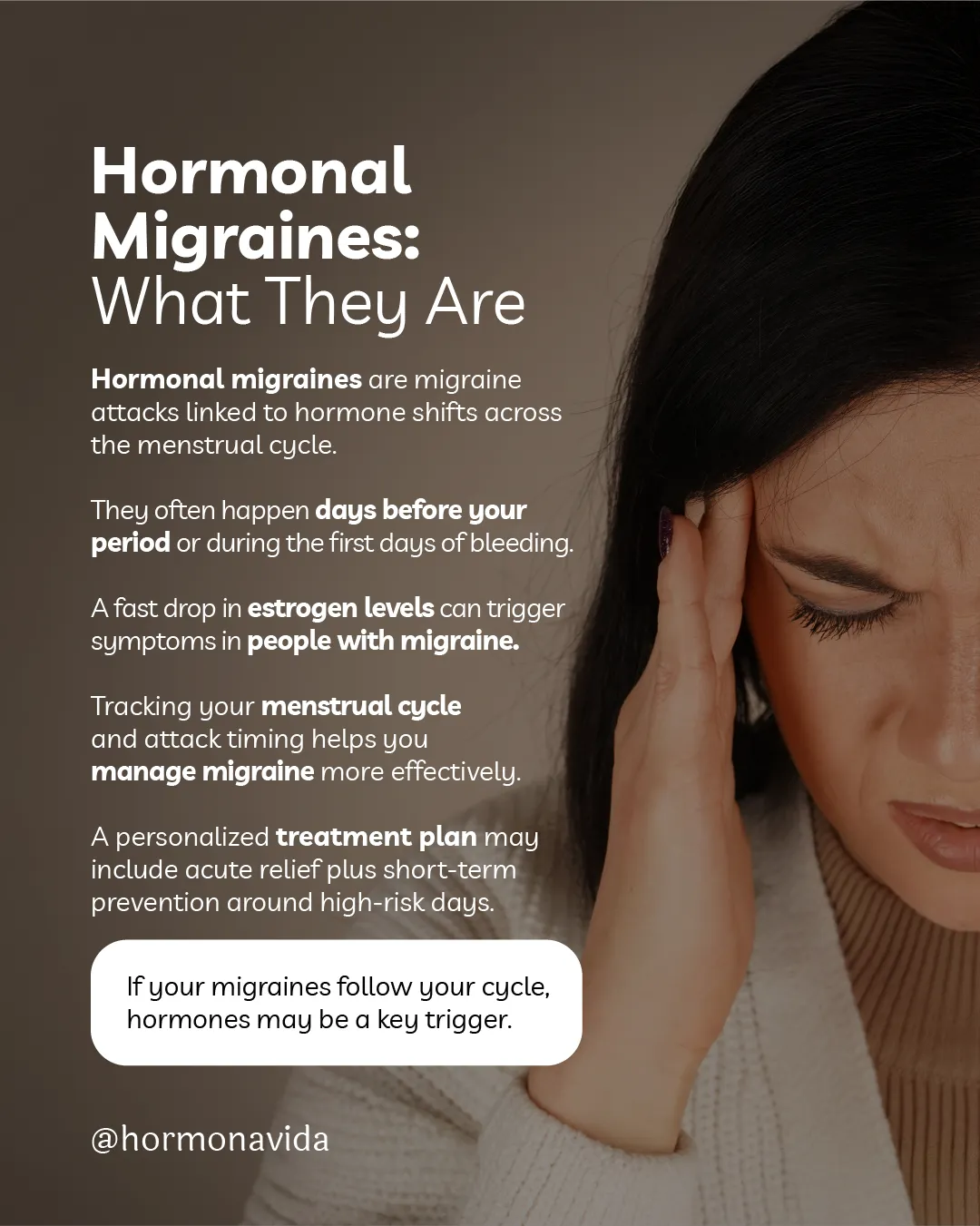
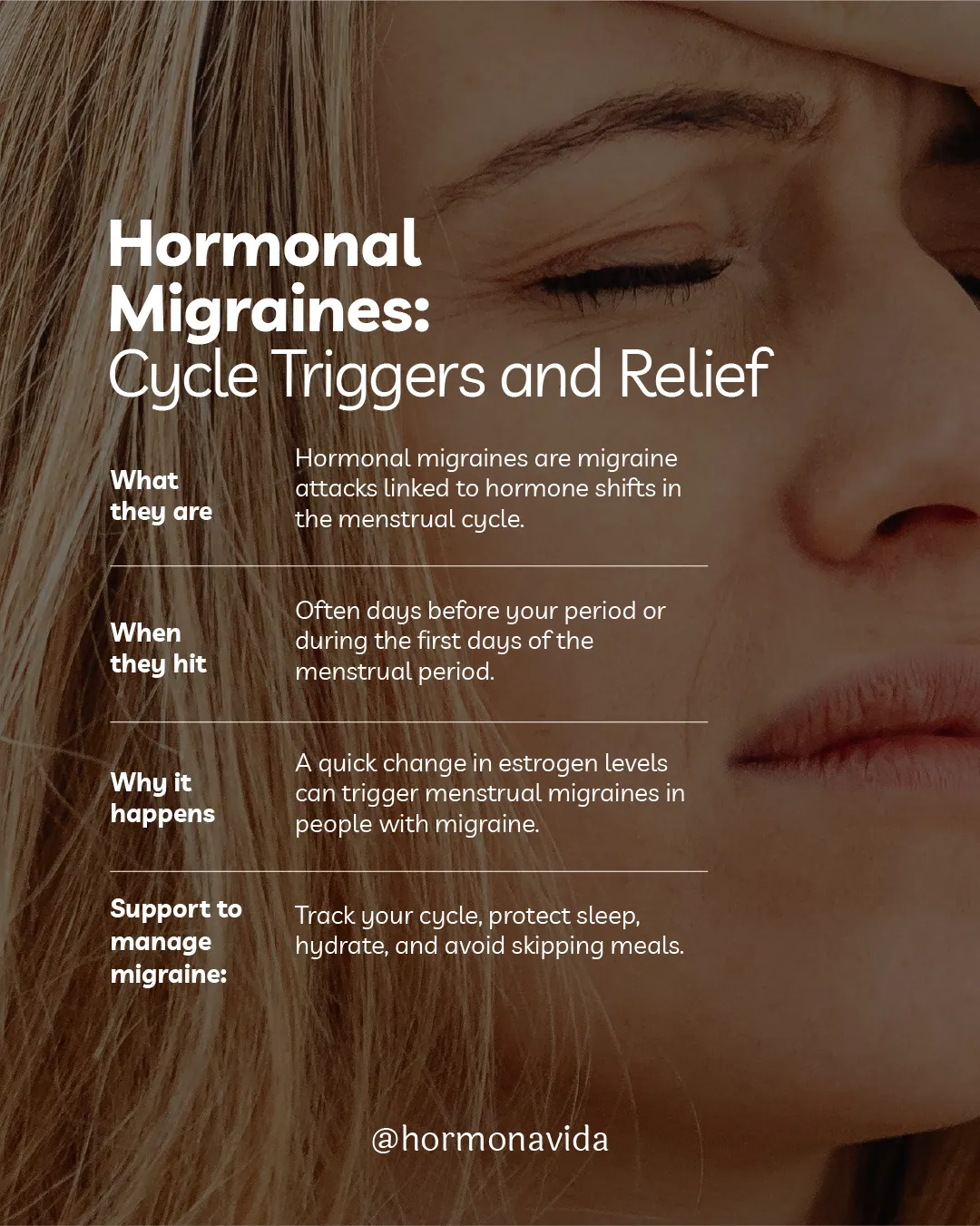
Hormonal migraines are migraine attacks linked to hormone shifts across your cycle. Many people call them menstrual migraines when timing clusters around bleeding days.
A common clinical definition helps confirm the pattern. Attacks often start days before your period, or during early flow days. The American Migraine Foundation describes a window from two days before bleeding through day three.
Why estrogen changes can trigger migraine attacks
For many people with migraine, changes in estrogen levels matter more than the absolute number. A quick drop can act like a trigger. This idea is often called the estrogen withdrawal hypothesis.
The timing explains why symptoms may appear right before bleeding starts. It also explains why symptoms can return with skipped meals, poor sleep, or stress. Hormones and daily habits can amplify each other.
How hormonal migraines can show up across the cycle
Some people get attacks only around bleeding. Others get them at ovulation, or during hormone changes from contraception. Migraine patterns can vary, even within the same person.
Many women with migraine describe predictable clusters and fewer “random” attacks. They also report stronger nausea, light sensitivity, and fatigue during hormone-linked episodes.
Risk factors that make the pattern more likely
Your personal risk factors shape both frequency and safety choices. A key one is migraine with aura, which changes contraceptive counseling.
Other factors matter, too, like smoking, high blood pressure, and clotting history. Mayo Clinic highlights extra caution with estrogen-containing contraception, especially with aura and smoking.
If your migraines changed suddenly, do not “power through” and guess. New patterns deserve a review, especially with neurologic symptoms.
Start with tracking, because patterns guide treatment
Before you try to manage migraine episodes, capture your timing. A simple diary can reveal your highest-risk days. Track cycle day, sleep, stress, meals, and any hormonal contraception changes.
Also track medication response and side effects. This helps you and your clinician treat menstrual migraine more precisely. It also reduces trial-and-error frustration.
A helpful starter goal is eight weeks of notes. Two full cycles often show the clearest trend.
Treatment options that can fit a real life schedule
A strong treatment plan often includes acute tools plus prevention. Acute care treats an active attack quickly. Prevention reduces frequency, severity, and disability over time.
Acute relief during an attack
Many clinicians start with anti inflammatory drugs, also called NSAIDs. Common options include ibuprofen or naproxen, depending on your history.
Triptans are another common acute option for migraine attacks. Your clinician chooses the right one based on symptoms and safety history.
If nausea blocks oral meds, non-oral options may help. That can include nasal or injectable approaches, guided by your provider.
Short-term prevention around your period
Many patients do well with “mini-prevention” around predictable high-risk days. The American Migraine Foundation describes short-term prevention using NSAIDs, triptans, or estrogen strategies.
This approach can fit the typical “two days before” window. It can also reduce the need for repeated rescue doses. Your clinician tailors timing to your cycle regularity.
Longer-term prevention when attacks are frequent
If migraines happen many days each month, daily prevention may fit better. Options vary widely, and they depend on your migraine type. They also depend on pregnancy plans and other conditions.
This is where telehealth can help with structured follow-ups. Small adjustments, done consistently, often beat big changes done once.
Hormonal birth control and migraines: what to know
Some people find hormonal birth control stabilizes fluctuations. Others find it worsens symptoms, especially with estrogen changes. Mayo Clinic notes that oral contraceptives can worsen migraines for some people.
Birth control pills and the vaginal ring can contain estrogen and progestin. These are often called combined hormonal methods. They can help some menstrual migraines, but they require careful screening.
If you have migraine with aura, guidelines often urge caution with estrogen-containing contraception. Stroke risk discussions become more important, especially with additional risks.
This is not a one-size decision. The American Headache Society emphasizes clinician discussion before starting hormonal contraception.
Lifestyle support that complements medical care
Lifestyle will not replace medical treatment for everyone. Still, it can lower your baseline vulnerability. It can also reduce how often hormones “tip you over.”
Start with sleep and meal timing, because migraine brains hate unpredictability. Prioritize hydration and protein, especially in the late luteal phase. Add gentle movement to reduce stress load and support circulation.
Many people benefit from an anti-inflammatory eating pattern. Focus on fiber, omega-3 fats, and colorful plants. Limit skipped meals, alcohol spikes, and dehydration triggers.
When to seek urgent care
Some symptoms should never be ignored. Seek care for new weakness, trouble speaking, or unusual vision changes. Mayo Clinic advises urgent evaluation for new neurologic symptoms, especially if they are unfamiliar.
Also seek help if headaches become sudden and severe. Or if you need rescue medication too often.
The Hormona Vida approach to hormonal migraines
Hormona Vida supports patients through a structured, supportive process. We look at symptoms, cycle timing, sleep, stress, and medication history. We also consider contraception choices and hormone transitions.
Then we help you build a realistic treatment plan you can follow. That plan may include migraine tools, lifestyle targets, and follow-up checkpoints. If you are in Florida or California, our telehealth team can guide next steps.
Frequently Asked Questions
Can hormones cause migraines?
Hormone shifts can trigger migraine attacks in susceptible people. Estrogen changes are a common driver across the menstrual cycle.
What causes hormonal migraines?
A rapid drop in estrogen levels is a common trigger. Sleep disruption, stress, and missed meals can amplify that vulnerability.
How do you prevent hormonal migraines?
Track your cycle and target high-risk days. Mini-prevention with clinician guidance can reduce predictable menstrual attacks.
How do you stop hormonal migraines once they start?
Use your acute plan early, not late. Many patients use NSAIDs or other prescribed options based on safety history.
How do you treat menstrual migraine if birth control is involved?
Review your migraine type and stroke risk profile first. People with aura often need non-estrogen options or specialist guidance.
Sources
- American Headache Society. (n.d.). Migraine, contraception, and menstrual cycle.
- American Headache Society. (2017, December 13). Migraine with aura, contraceptives and stroke risk.
- American Migraine Foundation. (2022, January 13). Hormonal and menstrual migraine: Symptoms and treatment.
- American Migraine Foundation. (n.d.). Menstrual migraine treatment and prevention.
- American Migraine Foundation. (2021, November 18). NSAIDs for migraine.
- Mayo Clinic. (2025, July 8). Migraine: Symptoms and causes.
- Mayo Clinic. (n.d.). Headaches and hormones: What’s the connection?
- Thompson, A. J., et al. (2023, September 21). Menstrual migraine is caused by estrogen withdrawal: Revisiting the evidence. PMC.