

Waist Circumference: What It Tells You That Weight Can’t
Medically reviewed by our medical team
The number on the scale does not tell the whole story about your health. It shows how much you weigh, but not what that weight is made of or where your body stores fat.
Waist circumference can add another useful piece of information. This article explains what it measures, why it matters during midlife, and how to measure it correctly.
Key Takeaways
- Two women at the same weight can have different body composition.
- Waist circumference is a simple measure of fat stored around the abdomen.
- Fat around internal organs is linked with higher metabolic and heart risk.
- Body composition often shifts during the menopause transition.
- No single number tells the full story of your health.
Why Doesn’t Weight Alone Tell the Whole Story?
Two people at the same weight can carry different amounts of muscle mass, fat, and bone. They can also store fat in different places.
Body mass index, or BMI, compares weight with height. The Centers for Disease Control and Prevention explains that BMI does not distinguish fat from muscle and bone. It also does not show where in the body a person carries fat.
What Does Waist Circumference Measure?
Waist circumference is a simple clinical measure. It offers an indirect estimate of abdominal fat accumulation and can add information that body weight alone cannot provide.
An international consensus statement on waist circumference found that it adds information to BMI for predicting disease risk. Its authors proposed treating it as a vital sign in clinical practice.
Subcutaneous vs. Visceral Fat: What’s the Difference?
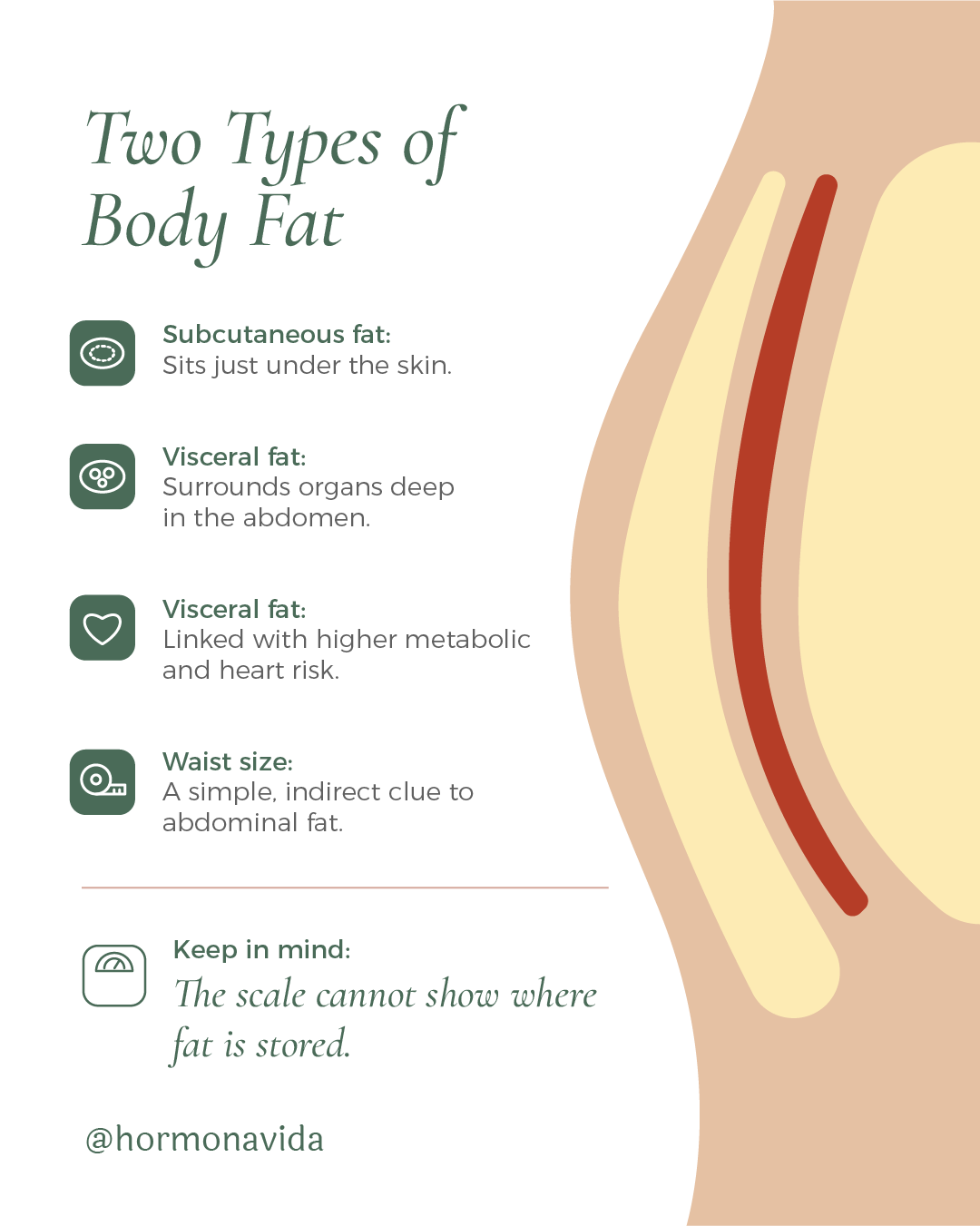
Subcutaneous fat sits beneath the skin. Visceral fat is metabolically active and surrounds the internal organs deep within the abdomen.
Higher levels of visceral fat are associated with greater health risks, including metabolic syndrome and cardiovascular disease. Waist size cannot measure visceral fat directly. Still, a larger waist often reflects more fat around the organs.
Why Does Body Composition Change in Midlife?
Many factors shape where the body stores fat over time. These include aging, physical activity, muscle loss, sleep, nutrition, and genetics.
Hormonal changes around menopause also play a role in menopausal weight gain. The Office on Women’s Health notes that many women gain weight around menopause. Many women also notice that fat tends to collect around the abdomen, often called menopause belly fat. Regular exercise, including strength training, can help reduce weight and waist size.
Muscle is also important. Our article on muscle and healthy aging after 40 explains why preserving muscle supports metabolic health.
How Is Waist Size Linked to Metabolic Health?
Greater abdominal fat is associated with insulin resistance, type 2 diabetes, and heart disease. The National Heart, Lung, and Blood Institute notes that fat stored mainly around the waist raises the risk of these health problems.
A waist measurement is not a diagnosis. It is one signal that may prompt a closer look at blood pressure, blood sugar, and cholesterol. Our guide on why cholesterol can change around menopause explores a related shift.
Is There a Healthy Waist Measurement for Women?
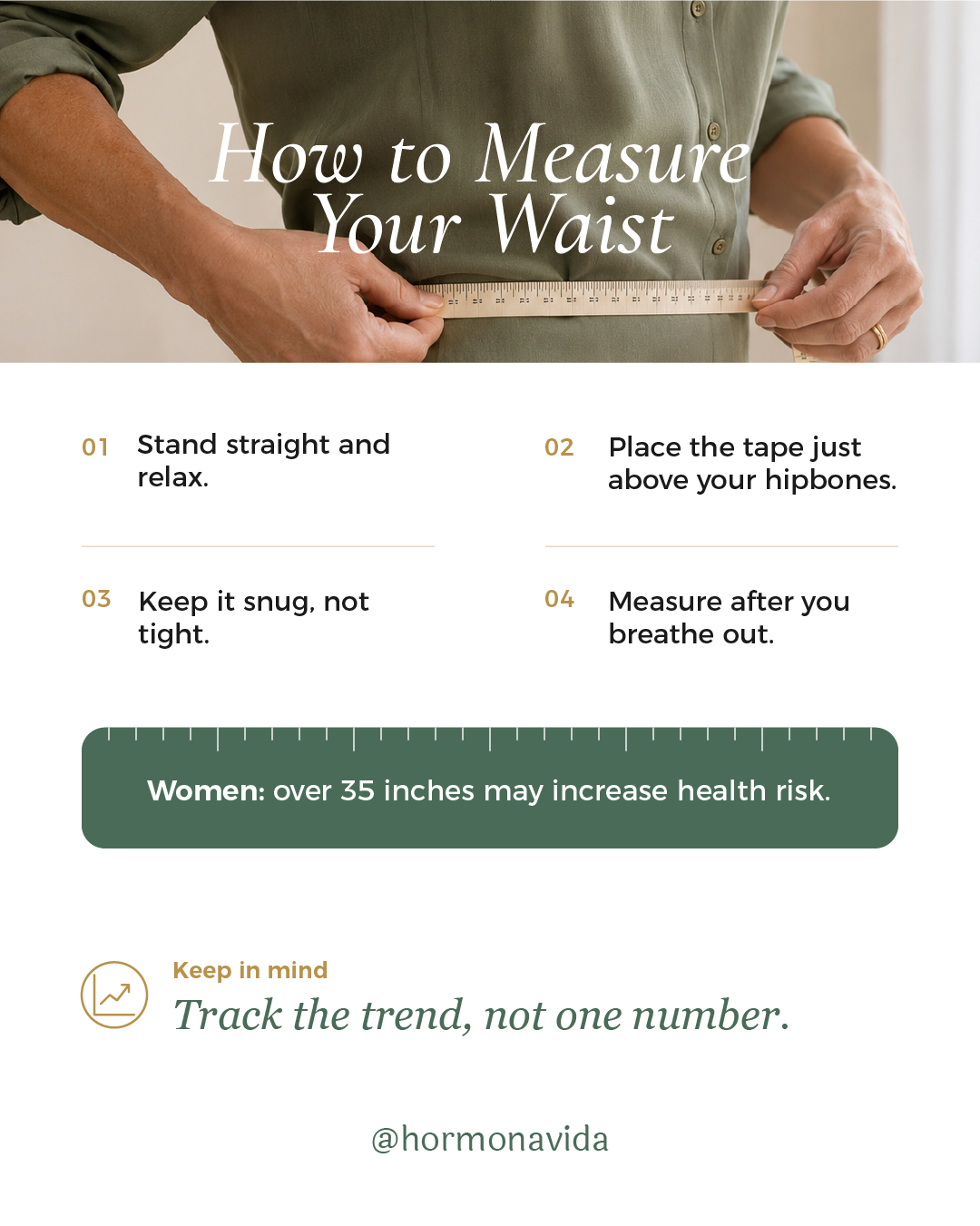
The NHLBI notes that a waist circumference over 35 inches increases health risk for women. For men, the threshold is 40 inches.
These cutoffs can vary by sex, ethnicity, and the guideline being used. Researchers also use the waist to hip ratio and the waist to height ratio. A single measurement should always be read within your overall health picture.
How Should You Measure Your Waist?
When measuring waist circumference, consistent technique matters more than one perfect reading. The NHLBI recommends these steps:
- Stand up straight and relax
- Place a flexible tape around your middle, just above your hipbones
- Keep the tape snug but not tight
- Measure after you breathe out
Measure at the same time of day each time to follow your trend.
Should You Track Your Waist Instead of Your Weight?
Weight loss is not the only measure of progress. Waist size, weight, blood pressure, lab results, muscle strength, and fitness each show a different piece of the picture.
Together, they offer a fuller view of your metabolic health than any one number can.
The Goal Is Better Health, Not a Smaller Body
The focus does not need to be a specific body size. Maintaining muscle, staying active, and sleeping well support metabolic health. Sustainable nutrition habits with less processed food also support heart health over time.
Key Takeaway
The scale tells you how much you weigh, but not where you store fat. Waist circumference can add useful information about metabolic health when read alongside your other health measures.
At Hormona Vida, we look at patterns over time within structured care that reflects your hormonal transition and goals.
Curious What Your Numbers Mean?
Your body composition deserves thoughtful context, not a single number. To review your metabolic health and options, Speak With Our Care Team.
Frequently Asked Questions
What is a healthy waist circumference for women?
The NHLBI notes that a waist over 35 inches increases health risk for women. Cutoffs can vary by ethnicity and guideline.
Why does belly fat increase after menopause?
Hormonal changes, aging, and muscle loss can shift menopause weight toward the abdomen during the transition.
Is waist circumference better than BMI?
Neither is perfect alone. Waist circumference adds information about where fat is stored, which BMI cannot show.
References
Centers for Disease Control and Prevention. (2025). About body mass index (BMI). U.S. Department of Health and Human Services.
National Heart, Lung, and Blood Institute. (2025). Aim for a healthy weight. National Institutes of Health.
Office on Women’s Health. (n.d.). Menopause and your health. U.S. Department of Health and Human Services.
Ross, R., Neeland, I. J., Yamashita, S., Shai, I., Seidell, J., Magni, P., Santos, R. D., Arsenault, B., Cuevas, A., Hu, F. B., Griffin, B. A., Zambon, A., Barter, P., Fruchart, J.-C., Eckel, R. H., Matsuzawa, Y., & Després, J.-P. (2020). Waist circumference as a vital sign in clinical practice: A consensus statement from the IAS and ICCR Working Group on Visceral Obesity. Nature Reviews Endocrinology, 16(3), 177–189.


