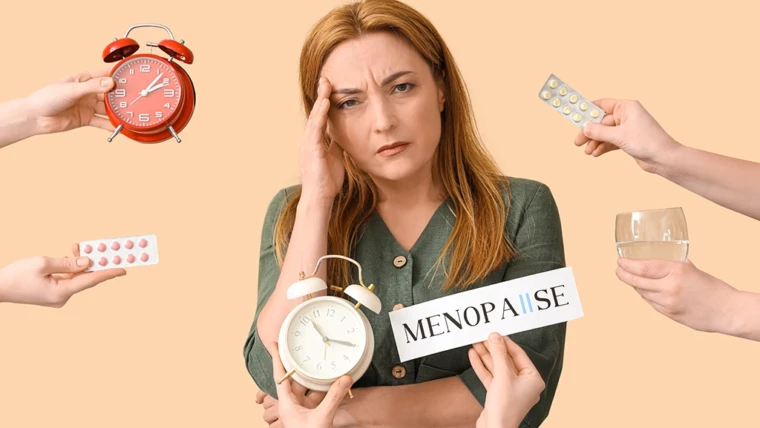

Menopause Awareness Month: More Than Hot Flashes
Medically reviewed by our medical team
October is Menopause Awareness Month. Yet menopause is still often reduced to hot flashes and the end of periods.
In reality, the menopause transition can affect sleep, mood, bone health, heart health, and sexual comfort. This stage deserves careful attention, not quiet endurance.
Key Takeaways
- Menopause is a transition with several stages, not a single day.
- Common symptoms go well beyond hot flashes and vary from woman to woman.
- Midlife is an important time to review heart and bone health.
- Menopause care works best when it is individualized.
Why Do We Have Menopause Awareness Month?
This month creates space for education and more open conversations. World Menopause Day, led by the International Menopause Society, falls on October 18 and shares the same goal.
The World Health Organization describes menopause as one point in a continuum of life stages. Its hormonal changes can affect physical, emotional, mental, and social well-being.
What Are the Stages of Menopause?
According to the Office on Women’s Health, the stages are perimenopause, menopause, and postmenopause:
- Perimenopause: hormone levels shift and your menstrual cycle may become irregular. It often begins in the mid- to late 40s.
- Menopause: you reach menopause after 12 consecutive months without a menstrual period. The average age of menopause in the United States is 52.
- Postmenopause: the ovaries stop releasing eggs and make very little estrogen and progesterone.
Symptoms can begin years before your final period. Our guide on how long menopause lasts explains what can affect this timeline.

Is Menopause Only About Hot Flashes?
No. Hot flashes and night sweats are the best-known menopausal symptoms, but women may also notice (Office on Women’s Health, 2026b):
- Sleep problems
- Brain fog and mood changes
- Joint and muscle pain
- Vaginal dryness and urinary symptoms
- Changes in sexual desire
Estrogen, progesterone, and testosterone act in nearly every system of the body. That is why their decline can affect so many areas at once (Office on Women’s Health, 2026a).

What If You Just Don’t Feel Like Yourself?
Many women know something has changed but struggle to describe it. The Office on Women’s Health now lists “not feeling like yourself” as a recognized symptom.
These changes deserve attention, not dismissal as “just midlife.”
Why Is Menopause a Long-Term Health Conversation?
Midlife is a natural time to look beyond symptoms. Heart disease risk, cholesterol, bone health, muscle strength, and metabolic health all deserve attention.
According to The Menopause Society, most cardiovascular disease in women occurs after menopause. Cholesterol levels may also rise in the early postmenopausal years. Read more about why cholesterol can change around menopause.
Is There a “Normal” Menopause Experience?
There is no single normal experience. Some women have few symptoms, while others find them severe enough to affect daily life (World Health Organization, 2024). A path that differs from a friend’s or sister’s does not mean something is wrong.
When Should You Talk to a Provider?
You do not have to wait until symptoms feel unbearable. Consider a visit when changes affect your sleep, mood, relationships, or quality of life.
Menopause treatments are not one-size-fits-all. Options may include lifestyle strategies, nonhormonal treatments, or hormone therapy when clinically appropriate. Each option has benefits and risks to weigh with your provider.
Key Takeaway
Menopause Awareness Month is about more than hot flashes.
Instead of “It’s just your age,” the conversation can become: “What has changed, and what options may fit me?” At Hormona Vida, we see this hormonal transition as a time for structured, continuity-based care.
Does Something Feel Different?
If your sleep, mood, energy, or sexual health has changed, you do not have to dismiss it. To review what has changed and which options may fit you, Speak With Our Care Team.
Frequently Asked Questions
When is Menopause Awareness Month?
It takes place every October. World Menopause Day falls on October 18.
What are the three stages of menopause?
The stages are perimenopause, menopause, and postmenopause. Menopause begins once you go without a period for 12 months in a row.
What symptoms besides hot flashes can menopause cause?
Sleep problems, brain fog, mood changes, joint pain, vaginal dryness, and urinary symptoms are all common.
References
The Menopause Society. (n.d.). Menopause topics: Heart health.
Office on Women’s Health. (2026a). Menopause basics. U.S. Department of Health and Human Services.
Office on Women’s Health. (2026b). Menopause symptoms and relief. U.S. Department of Health and Human Services.
World Health Organization. (2024). Menopause.