

What Is Bioidentical Hormone Therapy?
People often discuss bioidentical hormone therapy in midlife health, but they do not always explain the term clearly.
For many women navigating perimenopause or menopause, that lack of clarity can make decision-making harder. They may hear that bioidentical hormones are more natural, safer, or more personal. Yet the language used to describe them is often inconsistent.
This article explains bioidentical hormone therapy. It covers common myths about it. It also places it in the wider context of midlife hormone care.
Key Takeaways
- “Bioidentical” describes a hormone’s molecular structure.
- It does not automatically describe how clinicians prescribe it.
- It also does not describe how manufacturers make it or how clinicians monitor it.
- Some FDA-approved hormone therapies use bioidentical hormones, and some marketers also label compounded products as bioidentical.
- Major medical societies advise caution with compounded hormone products when FDA-approved options are available.
- The most appropriate hormone therapy depends on symptoms, medical history, risk factors, route of delivery, and ongoing follow-up.
- In midlife hormonal care, context matters more than trend-driven language.
What Is Bioidentical Hormone Therapy?
In plain language, bioidentical hormone therapy uses hormones that are chemically identical to hormones the body naturally produces.
The most commonly discussed bioidentical hormones in menopause care are estradiol and progesterone. In some cases, doctors may consider testosterone. Its use in women is more limited. It also needs careful clinical judgment.
Many people use the term bioidentical as if it describes a special treatment. They often assume it is more natural or more personalized. That is not quite accurate.
A hormone can be bioidentical and still be part of an FDA-approved medication. Clinicians consider transdermal estradiol patches and micronized progesterone bioidentical because their molecular structure matches endogenous human hormones. People also call some compounded hormone preparations bioidentical, even though they custom-mix them. Manufacturers do not make them as standardized, FDA-approved products.
The American College of Obstetricians and Gynecologists states in its clinical guidance on compounded bioidentical hormone therapy. It notes that “bioidentical” is mainly a marketing term, not just a biochemical one. It also says this label does not mean the therapy is safer or more effective.
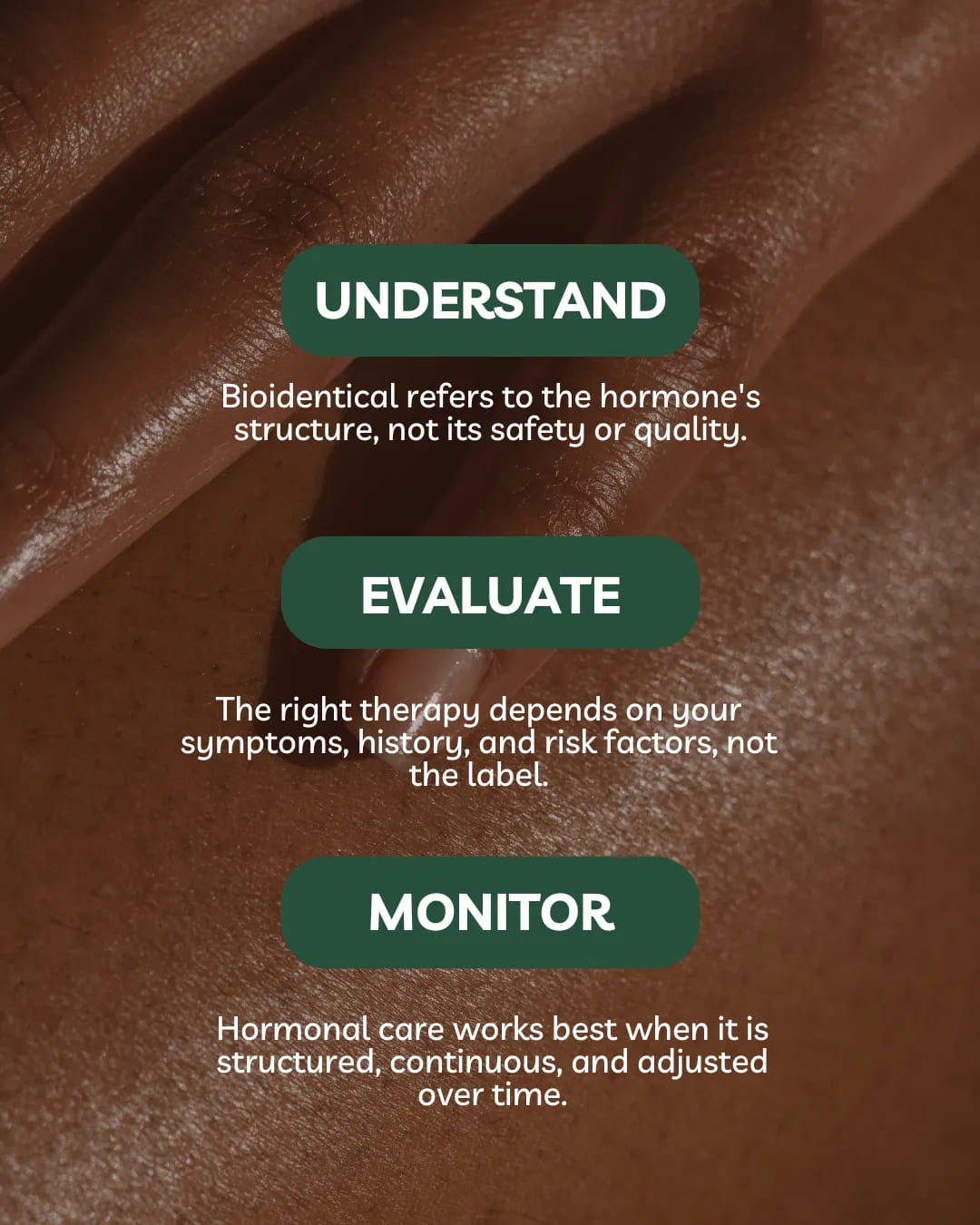
Bioidentical hormone therapy refers to the structure of the hormones. It does not describe the quality of care. It also does not mean it is right for you.

Why This Happens in Midlife
During perimenopause and menopause, estrogen and progesterone levels change over time rather than in a simple straight line. Those shifts may affect temperature regulation, sleep, mood, vaginal and urinary tissues, cognition, and bone health.
For some women, hormone therapy may be appropriate to reduce bothersome vasomotor symptoms or to help address genitourinary symptoms associated with menopause. According to the North American Menopause Society’s 2022 position statement, hormone therapy is the most effective treatment. It treats vasomotor symptoms and genitourinary syndrome of menopause in appropriate candidates.
That said, not every woman needs hormone therapy, and not every symptom in midlife is hormonal in origin. Thyroid changes, sleep disorders, mood conditions, metabolic changes, and other health issues may overlap.
How This May Appear
Women navigating this transition may notice a range of changes that prompt questions about hormone therapy. These can include:
- Frequent hot flashes or night sweats that disrupt daily life or sleep
- Vaginal dryness, discomfort with intercourse, or urinary changes
- Sleep disruption that does not resolve with standard measures
- Mood shifts, irritability, or low energy that seem to follow a hormonal pattern
- Cognitive changes such as difficulty concentrating or memory lapses
In some cases, these symptoms appear gradually rather than all at once. They may also overlap with other conditions, which is one reason evaluation matters more than self-diagnosis.
What Often Gets Misunderstood
One of the most common misunderstandings is that bioidentical and compounded mean the same thing. They do not.
Bioidentical refers to the molecular structure of the hormone. “Compounded” means a compounding pharmacy mixes the product, often in a customized dose or formulation.
Some compounded products may be necessary in select cases, such as allergy-related excipient issues or uncommon dosing needs. But major professional organizations have advised against routinely preferring compounded menopausal hormone therapy when FDA-approved options are available.
ACOG says there is not enough high-quality data. The data is about the safety of custom-compounded bioidentical hormone therapy. The data is also about how well it works.
It recommends that clinicians not routinely prescribe these products for menopause. This is especially true when approved formulations are available.
The Endocrine Society has also warned that claims about compounded bioidentical hormone therapy often lack strong evidence. It also notes concerns about dose changes, purity, and limited safety data. These issues need careful attention.
Another misunderstanding is the idea that clinicians should dose hormone therapy primarily based on salivary testing. Many marketers make this claim, but most menopause guidelines do not support it. Hormone levels can change a lot, especially during perimenopause. Symptoms may not match a single lab result from one test.
This is one reason many women feel confused. People often offer a simplified framework where biology actually varies.
Why Context Matters
At Hormona Vida, bioidentical hormone therapy is not viewed as a product category to be promoted in isolation.
We assess this within the broader clinical picture. This includes symptom patterns and menstrual or reproductive stage.
It also includes sleep, metabolic health, and cardiovascular history. They also consider bone health, mood, and sexual health. These factors may change over time.
This is where continuity-based care matters. A single snapshot rarely provides a full understanding of hormonal transitions. Thoughtful care often requires structured follow-up, ongoing monitoring, and measured adjustments rather than quick assumptions.
This approach is consistent with evidence-based menopause care. The North American Menopause Society stresses personal care, shared decisions, and regular review. It also considers dose, form, route, goals, and changing risks over time.
Responsible hormone therapy is not simply about choosing something labeled bioidentical. Choosing an appropriate treatment plan for the right person with the right oversight is key.
For women looking to understand the larger framework around midlife symptoms, related reading may include Perimenopause Education, Menopause Care, and Hormone Therapy Overview.
When Clinical Evaluation May Be Helpful
A more structured evaluation may be worth considering if symptoms are persistent, disruptive, or difficult to explain. This may include:
- Frequent hot flashes or night sweats
- Sleep disruption affecting daily function
- Vaginal dryness, pain with intercourse, or urinary discomfort
- Mood or cognitive changes that seem to follow a hormonal transition
- Early menopause, surgical menopause, or complex medical history
- Uncertainty about whether hormone therapy is appropriate or safe
Clinical evaluation is essential before starting systemic hormone therapy. This is crucial if you have a history of blood clots or stroke.
Having estrogen-sensitive cancer is also important. Unexplained vaginal bleeding or liver disease is important. It also matters if you have major cardiovascular risk factors.
Guidance from the Mayo Clinic and MedlinePlus also shows that hormone therapy is not one-size-fits-all. Review it based on your risks, symptom severity, and treatment goals.
Conclusion
Bioidentical hormone therapy is often more nuanced than it first appears.
The term refers to hormone structure, not a guarantee of better care, better safety, or better outcomes. What matters most is not the label alone, but whether treatment is clinically appropriate, carefully selected, and responsibly monitored.
For women in midlife, that distinction matters. Hormonal care works best with context, steady follow-up, and ongoing review, not trend-based messaging or simple promises.
Still Have Questions About Your Symptoms?
Education can help clarify what may be happening, but personalized care requires clinical evaluation.
If you have symptoms from hormonal changes and want to know if Hormona Vida is right, our Care Team can help. They can explain the process.
References
- ACOG. (2023). Compounded bioidentical menopausal hormone therapy. American College of Obstetricians and Gynecologists.
- Cho, L., & Kim, C. (2020). Menopausal hormone therapy and heart risk: Updated guidance is at hand. Circulation.
- Mayo Clinic Staff. (2024). Menopause hormone therapy: Is it right for you? Mayo Clinic. MedlinePlus. (2024). Hormone replacement therapy. U.S. National Library of Medicine.
- Santoro, N., Braunstein, G., Butts, C., et al. (2016). Compounded bioidentical hormones in endocrinology practice: An Endocrine Society scientific statement. The Journal of Clinical Endocrinology & Metabolism.
- The North American Menopause Society. (2022). The 2022 hormone therapy position statement of The North American Menopause Society. Menopause, 29(7), 767–794.