Why Does Body Odor Menopause Happen? Causes and Solutions
Perimenopause and menopause come with a lot of changes in your body. You might expect the usual symptoms like mood swings or sleep issues. However, a new and stronger body odor surprises many women.
This change can feel frustrating or even a bit embarrassing. A prevalent part of the hormonal journey. Understanding why your natural scent changes is the first step toward feeling fresh.
At Hormonavida, we believe in empowering you with knowledge. You can manage these shifts with simple lifestyle adjustments.
How Hormonal Shifts Affect Your Scent
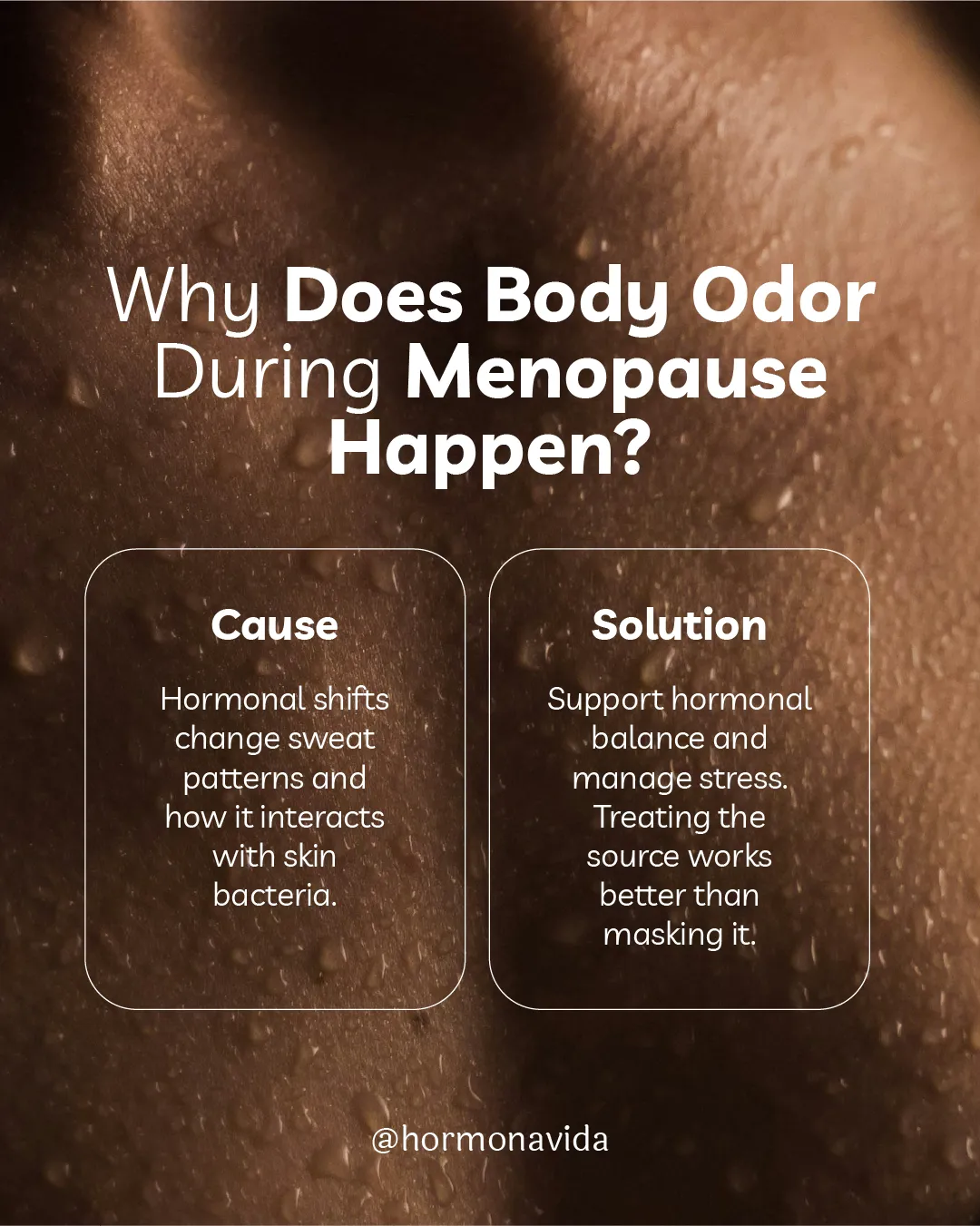
The primary cause of body odor menopause is the fluctuation of hormone levels. Specifically, falling estrogen levels trick the brain into thinking the body is overheating.
This triggers the hypothalamus to initiate cooling mechanisms. These mechanisms often result in hot flashes and night sweats. When your body tries to cool down, it produces increased sweat. This moisture provides a breeding ground for odor causing bacteria on the skin.
The Role of Your Sweat Glands
Not all sweat is created equal. Your body has more than one type of sweat gland. Eccrine glands produce a watery sweat to cool you down. However, apocrine glands sit in the armpits and groin.
These sweat glands produce a thicker fluid rich in proteins. When bacteria break down this fluid, your sweat smells more pungent. During menopause, these glands can become more active. This leads to a more noticeable and stronger body odor.
Why Does My Sense of Smell Seem Different?
Sometimes, the odor isn’t just about the sweat itself. Many women find their sense of smell becomes much more acute. You might notice scents that you never noticed before. This heightened awareness can make you feel more self-conscious.
You might feel like you have excessive sweating even when it is mild. Remember that this is a biological shift. Your body is simply responding to internal chemical changes.
Practical Tips to Manage Menopause Body Odor
You do not have to let body odor menopause control your daily life. Several effective ways to stay fresh and confident exist.
- Choose Breathable Fabrics: Wear natural fibers like cotton, silk, or linen. These breathable fabrics allow moisture to evaporate quickly from the skin.
- Use Antibacterial Soaps: Washing with antibacterial soaps can help. They help reduce bacteria on the surface of your skin.
- Stay Hydrated: It is vital to stay hydrated throughout the day. Drinking plenty of water helps regulate your internal body temperature.
- Manage Stress: Stress can trigger the apocrine glands to release more sweat. Use calming relaxation methods to soothe your nervous system.
- Update Your Deodorant: You may need a clinical-strength antiperspirant during this phase. Look for products specifically designed for high-stress or hormonal sweating.
Diet and Its Impact on Odor
What you eat can influence how your sweat smells. Spicy foods, caffeine, and alcohol can trigger hot flashes. These triggers lead to more frequent episodes of sweating.
Try to keep a food diary to see if certain items worsen the issue. Increasing your intake of leafy greens may also help. Some believe chlorophyll acts as a natural internal deodorizer.
The Hormonavida Approach to Wellness
At Hormonavida, we focus on the whole person. We recognize that perimenopause and menopause are major life stages. Although menopause-related body odor is physical, it can still undermine confidence.
Our goal is to provide supportive resources for every woman. We encourage you to embrace these changes with grace. Proper hygiene and the right clothing choices make a huge difference. You are not alone in experiencing these hormonal shifts.
When to Consult a Professional
Most scent changes are perfectly normal during midlife. Notice f the changes feel sudden or intense. If sweating is disrupting your sleep or affecting your daily life, that’s a sign it deserves attention.
A provider can help make sure nothing else is going on. They can also offer guidance on managing severe mood swings. Keeping track of your symptoms helps your doctor provide better care.

Conclusion
Experiencing a change in body scent is a natural part of the aging process. By focusing on breathable fabrics and staying hydrated, you can find relief.
Remember that your hormone levels are simply finding a new balance. Hormonavida is here to support you through every step of this transition. Stay confident, stay informed, and prioritize your comfort every day.
Frequently Asked Questions
Does menopause make your sweat smell like onions?
Hormonal changes can change the chemical composition of sweat. This sometimes results in a sharper or more acidic smell.
How long does menopause body odor last?
It usually stabilizes once your hormones reach a new equilibrium. Consistent hygiene habits help manage it in the meantime.
Can I use natural deodorants for menopause odor?
Natural options work for some, but others may need stronger protection. Look for natural ingredients like baking soda or charcoal.
Sources and References
- Harvard Health. (2022). Why has my natural scent changed during perimenopause?
- Midi Health. (2024). How to Treat Menopause Body Odor: Causes & Treatment.
- The Better Menopause. (2024). Menopause Body Odour: What It Smells Like and How To Treat It.
- Mayo Clinic. (2023). Sweating and body odor – Symptoms and causes.