

How Long Does Menopause Last and What Affects It?
Many women hear different answers about menopause. Some say it lasts a year. Others say symptoms stay for a decade. No wonder the question appears so often: menopause how long does it last?
Every woman experiences menopause differently. Still, science offers helpful averages and patterns. This guide explains timelines, common menopausal symptoms, and when to seek help. You will also find gentle, science-based support.
What Exactly Is Menopause?
Doctors define menopause in a very specific way. You reach menopause when your menstrual period has been absent for 12 consecutive months.
After this point, your ovaries stop releasing eggs. Production of the hormones estrogen and progesterone drops to a low steady level.
Menopause is only one point in time. However, the full transition includes three stages:
- Perimenopause
- Menopause (the single time point)
- Postmenopause
Most women experience menopause between ages 45 and 55. The average age is 51 in many countries.
Stages and Timelines: From Perimenopause to Postmenopause
Perimenopause: The Transition Years
Perimenopause is the long hormonal “ramp” into menopause. It often starts in a woman’s 40s. For some, it can begin around age 40.
During perimenopause, hormone levels rise and fall unpredictably. These shifts can cause:
- Irregular periods
- Hot flashes and night sweats
- Mood swings and anxiety
- Sleep problems
- Brain fog and trouble concentrating
- Bloating and weight gain
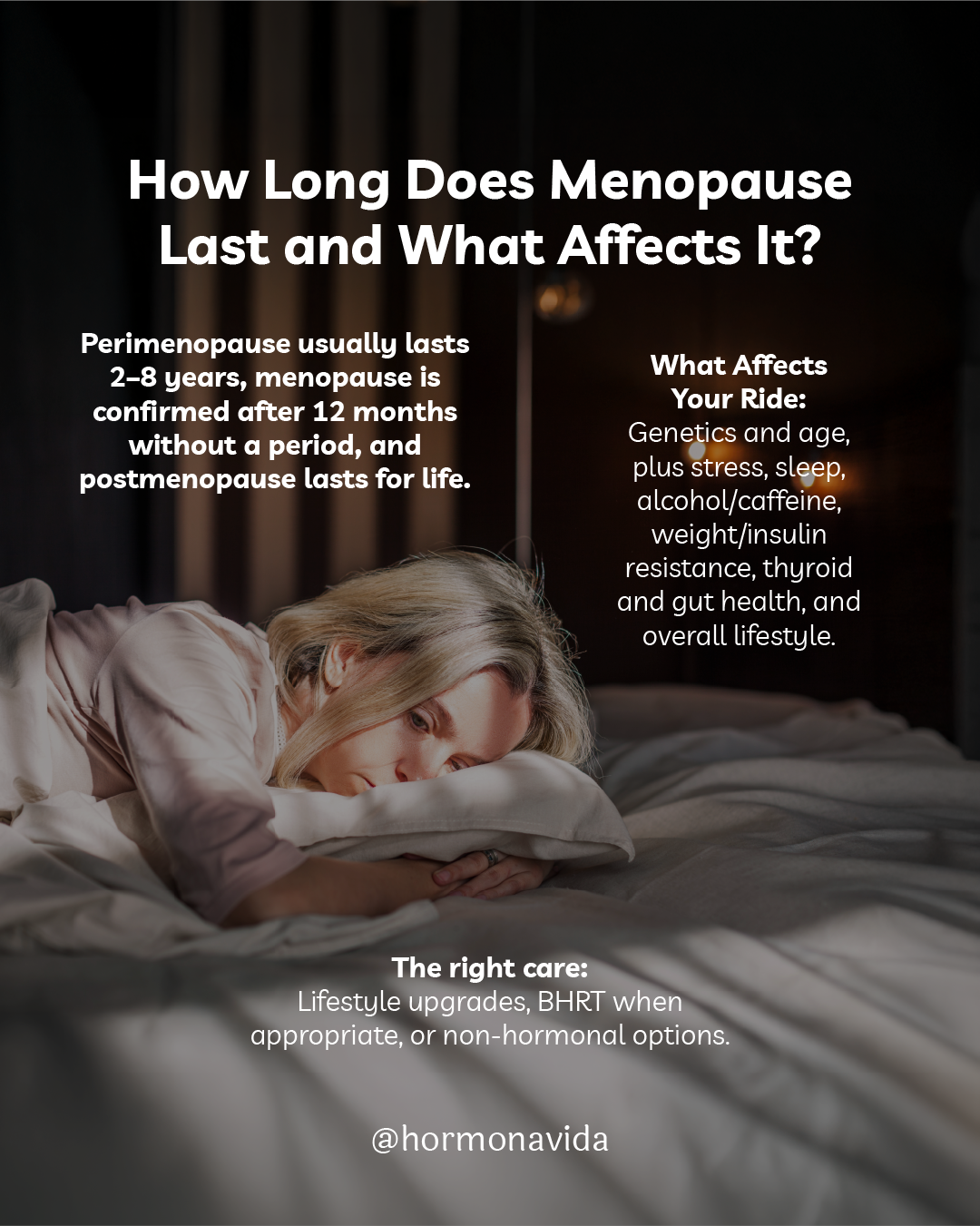
Research suggests perimenopause usually lasts between two and eight years.
Some women notice mild changes for a shorter time. Others feel intense symptoms for longer.
Menopause: When Periods Stop
You have entered menopause when your periods stop for one full year.
This moment confirms that fertility has ended. Many women still feel symptoms like hot flashes. However, monthly bleeding should not return.
If bleeding starts again after menopause, see a clinician promptly. Bleeding can signal a harmless cause. It can also point to something that needs evaluation.
Postmenopause: The Longest Stage
After the menopause point, you live the rest of life in postmenopause.
For many women, symptoms gradually lessen over time. However, some symptoms can last many years. Studies show hot flashes and night sweats may continue seven to eleven years on average.
A smaller group of women has vasomotor symptoms for more than ten years.
So, How Long Does Menopause Last Overall?
To understand the full journey, think about all stages together.
- Perimenopause: often 2–8 years
- Menopause: diagnosed after 12 months without periods
- Postmenopause: lasts for the rest of life
When people ask, “How long does menopause last once it starts?”, they usually mean symptom duration. For many women, noticeable symptoms last about seven years total.
Some feel changes for a shorter period. Others feel them for a decade or longer. There is no single “right” timeline.
Why Symptoms Last So Long
During the transition, estrogen levels and progesterone do not fall in a straight line. They rise, dip, and fluctuate.
This rollercoaster can trigger:
- Mood swings
- Brain fog
- Sleep disruption
- Changes in appetite and weight gain
- Changes in libido
- Skin and hair changes
The nervous system also adapts to new hormone patterns. Temperature control can become more sensitive. That is why hot flashes and night sweats appear.
The urogenital system changes too. Low estrogen can increase vaginal dryness and discomfort. Some women also notice more urinary tract infections after they entered menopause.
Health Beyond Symptoms: Why This Season Matters
Menopause is natural.
However, lower estrogen affects long-term health.
After menopause, the risk of heart disease and osteoporosis increases.
That does not mean disease is inevitable.
It simply means prevention matters more than ever.
Healthy food, regular movement, good sleep, and stress management all help.
So do regular checkups and lab work.
These steps can track hormone levels, cholesterol, blood pressure, and bone density.
Treatment Options: Easing the Transition
You do not need to “tough it out” alone.
If symptoms disrupt life, professional support helps.
Lifestyle Strategies
Many women start with lifestyle changes:
- Balanced meals with protein, fiber, and healthy fats
- Regular movement, including strength training
- Gentle nervous-system support, like breathwork or yoga
- Limiting alcohol and caffeine, especially at night
These steps can ease menopausal symptoms and support overall health.
Hormone Replacement Therapy and Other Options
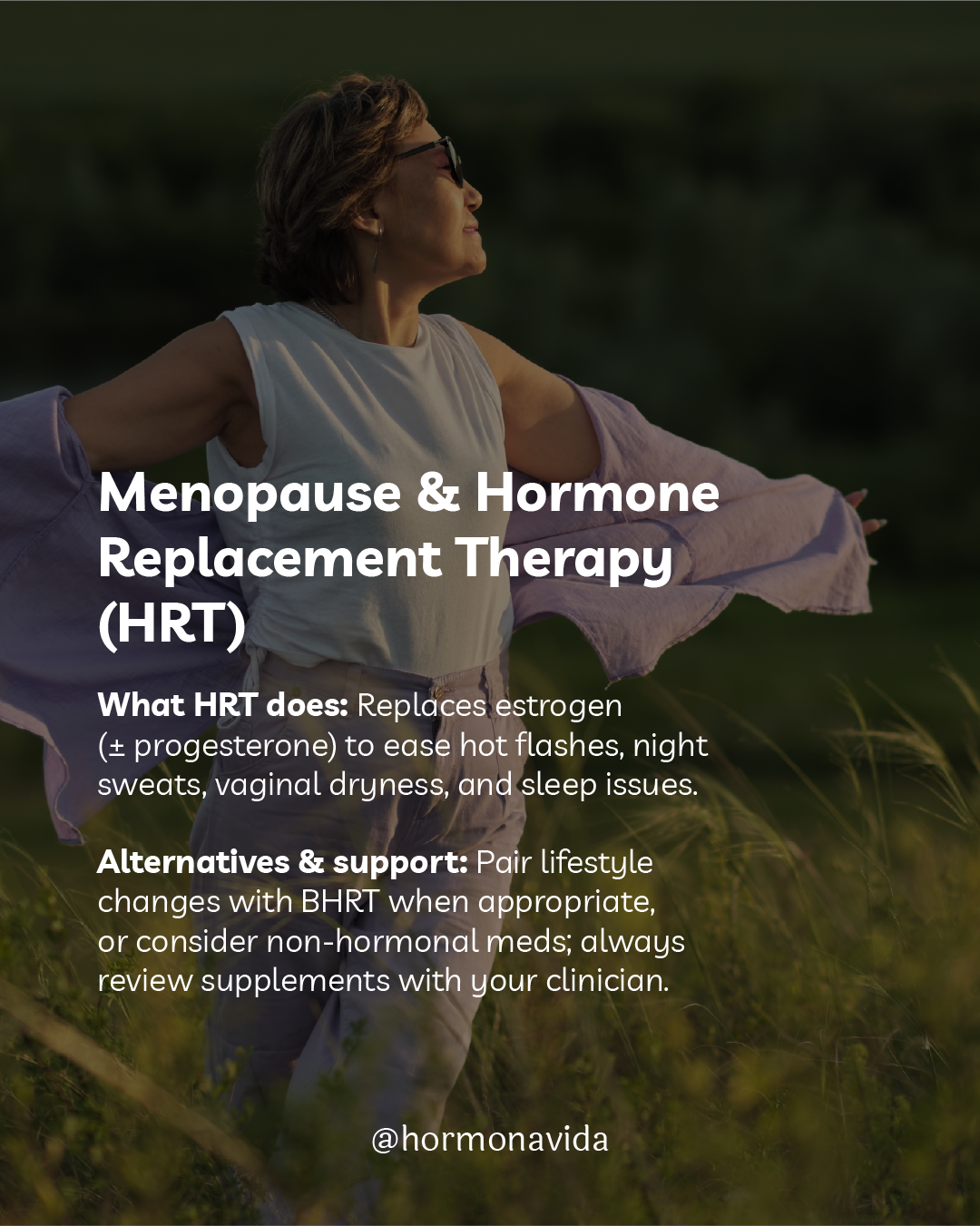
For moderate to severe symptoms, hormone replacement therapy may help. This therapy replaces some of the lost estrogen, sometimes with progesterone.
It can reduce hot flashes, night sweats, vaginal dryness, and sleep problems. However, it is not right for everyone.
Your clinician will review your medical history. They will consider age, time since last menstrual period, family history, and personal risk factors.
Some women benefit from non-hormonal medicines or complementary approaches. Always discuss supplements or herbal products with your provider first.
When to Talk With a Clinician
Seek medical advice if:
- Symptoms affect work, relationships, or quality of life
- You notice severe mood swings or ongoing sadness
- You experience chest pain, shortness of breath, or new palpitations
- You see bleeding after you reach menopause
- You notice frequent urinary tract infections or pain during sex
No concern is “too small”. You deserve clear information and compassionate care.
FAQs About Menopause Duration
How long does menopause last once it starts?
The transition usually lasts several years. Perimenopause can last 2–8 years.
Many women have symptoms for about seven years total. Some experience bothersome symptoms for longer.
What is menopause and how long does it last?
Menopause is the point when your period stops for 12 months. The moment itself is brief. However, the related hormonal transition can last many years.
When does menopause start and how long does it last?
The menopausal transition usually begins between ages 45 and 55.
Some women notice signs near age 40, which counts as early menopause if periods end then. Total symptom duration varies widely.
Does everyone have the same symptoms?
No. Every woman experiences menopause differently.
Some notice only mild changes. Others struggle with intense hot flashes, sleep loss, or brain fog.
Family history, lifestyle, stress, and medical conditions all play roles.
Gentle Conclusion: You Are Not Alone in This Season
Menopause is not a failure of your body. It is a natural, complex transition.
For many women, symptoms last several years. For others, they last longer.
Understanding your timeline brings relief. You can plan support, adjust habits, and ask informed questions.
If you feel overwhelmed, reach out. A knowledgeable clinician can review hormone levels, discuss hormone replacement therapy, and design a personalized plan.
At Hormona Vida, we believe this season can also open new possibilities. With the right care, you can move through menopause with clarity, strength, and hope.
References
- Cleveland Clinic. (n.d.). Menopause: What it is, age, stages, signs & side effects.
- Mayo Clinic. (2024, August 7). Menopause: Symptoms and causes.
- National Institute on Aging. (2024, October 16). What is menopause?
- National Institutes of Health, MedlinePlus Magazine. (2023, September 7). Menopause: What you need to know.
- The Menopause Society. (2024, September 4). Ongoing individualized hormone therapy appears to have no age limit.