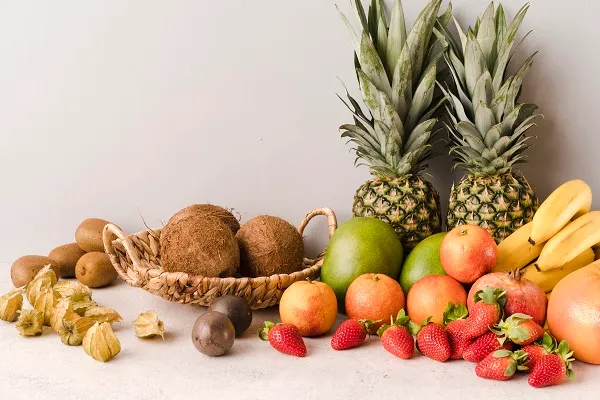
Most of the calories in these foods come from carbohydrates, a good source of energy. Many foods in this group also provide fiber, vitamins and minerals. Prepare and consume starchy foods with as little added fat as possible. Choose whole-grain starches whenever you can.
Each serving in this list contains 15 grams of carbohydrate, 0–3 grams of protein, 0–1 gram of fat and 80 calories.
In general, one starch serving is:
- ½ cup cooked cereal, grain, or starchy vegetable
- ⅓ cup cooked rice or pasta
- 1 oz of a bread product (for example, 1 slice of bread)
- ¾ to 1 oz of most snacks (some snacks may have extra fat)
Portion examples:
Bakery products:
| Food | Serving |
|---|---|
| Bagel (large, 4 oz) | ¼ |
| Biscuit (2½ inches across) * | 1 |
| Bread (whole wheat, white or rye, 1 oz) | 1 slice |
| Cornbread (1¾-inch cube or 1½ oz) * | 1 |
| English muffin | ½ |
| Hot dog / hamburger bun (1 oz) | ½ |
| Tortilla (corn or flour, 6 inches) | 1 |
| Waffle (1, 4-inch) * | 1 |
Pasta and grains:
| Food | Serving |
|---|---|
| Cooked cereal (oatmeal) | ½ cup |
| Ready-to-eat cereal (unsweetened) | ¾ cup |
| Couscous | ⅓ cup |
| Low-fat granola | ¼ cup |
| Cooked pasta | ⅓ cup |
| Cooked rice | ⅓ cup |
Starchy vegetables:
| Food | Serving |
|---|---|
| Corn | ½ cup |
| Ear of corn (large, 5 oz) | ½ ear |
| Canned creamed corn 🙂 | ¾ cup |
| Green peas 🙂 | ½ cup |
| Ripe plantain | ⅓ cup |
| Baked potato with skin (3 oz) | 1 |
| Boiled potato (3 oz) | ½ cup |
| Oven-baked fries (2 oz) | 1 cup |
| Mashed potatoes with milk & fat * | ½ cup |
| Squash 🙂 | 1 cup |
| Sweet potato / yam | ½ cup |
Snacks and cookies:
| Food | Serving |
|---|---|
| Butter-type cookies * | 6 |
| Soda crackers | 6 |
| Graham cracker (2½-inch) | 3 |
| Popcorn with butter 🙂 * | 3 cups |
| Low-fat popcorn 🙂 | 3 cups |
| Pretzels | ¾ oz |
| Fat-free tortilla/potato chips | 15–20 (¾ oz) |
| Regular chips * | 9–13 (¾ oz) |
Legumes → (count as 1 starch + 1 lean protein)
| Food | Serving |
|---|---|
| Baked beans 🙂 | ⅓ cup |
| Cooked beans (black, chickpea/garbanzo, kidney, lima, navy, pinto, white) 🙂 | ½ cup |
| Cooked lentils 🙂 | ½ cup |
| Cooked peas (black-eyed, split) 🙂 | ½ cup |
| Low-fat popcorn 🙂 | 3 cups |
| Pretzels | ¾ oz |
| Fat-free tortilla/potato chips | 15–20 (¾ oz) |
| Regular chips * | 9–13 (¾ oz) |
Fruits are good sources of fiber, whether fresh, frozen, or dried. Fruit juices contain very little fiber. Choose whole fruit instead of juices whenever possible. When using canned fruit, choose fruit packed in its own juice or in light syrup.
Each serving in this list contains 15 grams of carbohydrate, 0 grams of fat, 0 grams of protein and 60 calories.
In general, one fruit serving is:
- ½ cup fresh/canned fruit or 4 oz unsweetened juice
- 1 small fruit (4 oz)
- 2 tablespoons dried fruit
Portion examples:
| Food | Serving |
|---|---|
| Small apple (4 oz) | 1 |
| Unsweetened applesauce | ½ cup |
| Extra-small banana (4 oz) | 1 |
| Blackberries 🙂 | ¾ cup |
| Blueberries | ¾ cup |
| Raspberries 🙂 | 1 cup |
| Strawberries 🙂 | 1¼ cup |
| Melon | 1 cup |
| Fresh cherries (3 oz) | 12 |
| Dried fruit | 2 tbsp |
| Large grapefruit (11 oz) | ½ |
| Small grapes (3 oz) | 17 |
| Guava | ½ cup |
| Kiwi (3½ oz) 🙂 | 1 |
| Canned mandarin | ¾ cup |
| Small mango (5½ oz) | ½ fruit or ½ cup |
| Small orange (6½ oz) 🙂 | 1 |
| Papaya (8 oz) | ½ fruit or 1 cup |
| Fresh medium peach (6 oz) | 1 |
| Large fresh pear (4 oz) | ½ |
| Fresh pineapple | ¾ cup |
| Small plums | 2 |
| Dried prunes | 3 |
| Watermelon (13½ oz) | 1¼ cup |
Fruit juices:
| Food | Serving |
|---|---|
| Apple, grapefruit, orange, pineapple juice | ½ cup |
| 100% juice blends | ⅓ cup |
| Grape juice | ⅓ cup |
| Prune juice | ⅓ cup |
Milk and yogurt are rich in calcium and protein. Choose fat-free, low-fat and reduced-fat varieties for health. They have less saturated fat and cholesterol than whole dairy products.
Fat-free (skim) or low-fat (1%) milk and yogurt
Each serving from this list contains 12 grams carbohydrate, 8 grams protein, 0–3 grams fat and 100 calories.
| Food | Serving |
|---|---|
| Milk, buttermilk, acidophilus, Lactaid | 1 cup |
| Evaporated milk | ½ cup |
| Plain or low-calorie sweetened yogurt (6 oz) | ⅔ cup |
Reduced-fat (2%) milk and yogurt
Each serving from this list contains 12 grams carbohydrate, 8 grams protein, 5 grams fat and 120 calories.
| Food | Serving |
|---|---|
| Milk, acidophilus, Lactaid | 1 cup |
| Plain yogurt (6 oz) | ¾ cup |
Whole milk and yogurt
Each serving from this list contains 12 grams carbohydrate, 8 grams protein, 8 grams fat and 160 calories.
| Food | Serving |
|---|---|
| Milk, buttermilk, goat’s milk | 1 cup |
| Evaporated milk | ½ cup |
| Plain yogurt (8 oz) | 1 cup |
Dairy-type foods:
| Food | Serving / Exchange |
|---|---|
| Fat-free chocolate milk | 1 cup — 1 skim milk + 1 carbohydrate |
| Whole chocolate milk | 1 cup — 1 whole milk + 1 carbohydrate |
| Smoothies | 10 oz — 1 skim milk + 2½ carbohydrates |
| Regular soy milk | 1 cup — 1 carbohydrate + 1 fat |
| Low-fat fruit yogurt (6 oz) | ⅔ cup — 1 skim milk + 1 carbohydrate |
Try to eat at least 2 to 3 servings of non-starchy vegetables each day. Choose a variety of vegetables to benefit from their essential vitamins, minerals and antioxidants. When using canned vegetables, choose no-salt-added versions or rinse them.
In general, one serving of non-starchy vegetables is:
- ½ cup cooked vegetables or vegetable juice
- 1 cup raw vegetables
Examples:
Amaranth greens, green beans, bean sprouts, broccoli, cabbage, carrots 🙂, cauliflower, celery, cucumber, eggplant, Swiss chard, kale, mustard greens, jicama, mushrooms, okra, onion, peppers 🙂, radishes, sauerkraut !, spinach, zucchini, tomato, tomato sauce !, tomato/vegetable juice !, water chestnuts.
Try to eat at least 2 to 3 servings of non-starchy vegetables each day. Choose a variety of vegetables to benefit from their essential vitamins, minerals and antioxidants. When using canned vegetables, choose no-salt-added versions or rinse them.
Meats and protein sources are rich in protein. Whenever possible, choose lean cuts. Portion sizes in this list are based on cooked weight, after removing bone and fat. Carbohydrate content varies among plant proteins, so check food labels.
Lean meats (0 g carbohydrate, 7 g protein, 0–3 g fat, 45 kcal per serving):
| Food | Serving |
|---|---|
| Lean beef | 1 oz |
| Low-fat cheeses | 1 oz |
| Cottage cheese | ¼ cup |
| Egg whites | 2 |
| Fresh/frozen fish | 1 oz |
| Low-fat hot dog ! | 1 |
| Lean pork | 1 oz |
| Canadian bacon | 1 oz |
| Skinless chicken | 1 oz |
| Low-fat deli meats | 1 oz |
| Tuna in water/oil, drained | 1 oz |
Medium-fat meats (0 g carbohydrate, 7 g protein, 4–7 g fat, 75 kcal per serving):
| Food | Serving |
|---|---|
| Medium-fat beef | 1 oz |
| Medium-fat cheeses | 1 oz |
| Mozzarella, processed cheese, feta ! | 1 oz |
| Egg | 1 |
| Fried fish | 1 oz |
| Pork (chop, shoulder) | 1 oz |
| Chicken with skin / fried | 1 oz |
| Ricotta | ¼ cup |
| Medium-fat sausage ! | 1 oz |
High-fat meats (0 g carbohydrate, 7 g protein, 8+ g fat, 100 kcal per serving):
| Food | Serving |
|---|---|
| Pork bacon | 2 slices |
| Turkey bacon ! | 3 slices |
| Regular cheeses | 1 oz |
| Regular hot dog ! * | 1 |
| Pork rib | 1 oz |
| High-fat deli meats | 1 oz |
| High-fat sausage ! | 1 oz |
Plant proteins
| Food | Serving / Exchange |
|---|---|
| Cooked beans / lentils / peas 🙂 | ½ cup — 1 starch + 1 lean protein |
| Hummus 🙂 | ⅓ cup — 1 carbohydrate + 1 high-fat protein |
| Nut butters | 1 tbsp — 1 high-fat protein |
| Tempeh | ¾ cup — 1 medium-fat protein |
| Tofu (4 oz) | ½ cup — 1 medium-fat protein |
Choose heart-healthy mono- and polyunsaturated fats more often.
In general, one fat serving is:
- 1 teaspoon margarine, vegetable oil or butter
- 1 tablespoon salad dressing
Monounsaturated fats (MUFA):
- The body can produce some, but getting them from food enhances their benefits.
- They improve the lipid profile (↑ HDL, ↓ oxidized LDL) and help regulate inflammation.
- They support insulin sensitivity, metabolism, and hormonal balance.
| Food | Serving |
|---|---|
| Avocado (1 oz) | 2 tbsp |
| Nut butters | 1½ tsp |
| Almonds / peanuts | 6 |
| Macadamia | 3 |
| Pecans | 4 halves |
| Olive / canola / peanut oil | 1 tsp |
| Black olives | 8 large |
| Green olives ! | 10 large |
Polyunsaturated fats (PUFA):
- Include Omega-3 and Omega-6: essential fats (the body cannot produce them).
- Key for brain function, the nervous system, and steroid hormone production.
- Help modulate inflammation and maintain a healthy lipid balance.
| Food | Serving |
|---|---|
| Low-fat margarine | 1 tbsp |
| Regular margarine | 1 tsp |
| Low-fat mayonnaise | 1 tbsp |
| Regular mayonnaise | 1 tsp |
| Corn, cottonseed, flax, grape seed, safflower, soybean, sunflower oil | 1 tsp |
| Low-fat salad dressing ! | 2 tbsp |
| Regular salad dressing ! | 1 tbsp |
Saturated fats:
- The body can already produce them; excess intake raises LDL and cardiometabolic risk.
- Moderation and balance with MUFAs/PUFAs are recommended.
- Choose minimally processed sources when consumed.
| Food | Serving |
|---|---|
| Cooked bacon | 1 slice |
| Butter | 1 tsp |
| Half-and-half | 2 tbsp |
| Low-fat cream cheese | 1½ tbsp |
| Regular cream cheese | 1 tbsp |
| Low-fat sour cream | 3 tbsp |
| Regular sour cream | 2 tbsp |
Glossary
- * → Foods marked with * should be counted as 1 starch serving + 1 fat serving per portion.
- 🙂 → Foods marked with 🙂 contain more than 3 grams of dietary fiber per serving.
- ! → Foods marked with ! contain 400 mg or more of sodium per serving.
- oz = ounce.
- tsp = teaspoon.
- tbsp = tablespoon.
Sample Meal Plan: Integrating the Food Lists
Use this tool as a reference to adjust your portions according to your daily calorie needs.
For example, if your plan is 1600 kcal, look for the corresponding values and distribute your portions throughout the day (breakfast, lunch, dinner, and snacks).
Remember that the portions are based on the ADA Exchange Lists. This means that each food group has equivalents with the same caloric and nutritional value, allowing you to make flexible substitutions within your plan.
Below, you will find sample meal plans showing the recommended number of servings for different calorie requirements.
Each plan provides approximately half of its calories from carbohydrates and less than 25% from fats, considering fat-free milk choices and lean meats or low-fat cheeses (Lean Meat Group).
Select your daily calories below to see how many servings correspond to each food group:
| Food group | Servings / day |
|---|
* The numbers shown are individual servings from each food list.